
An ERP system should make it easier for your business to operate, adapt, and grow. It should bring financial, operational, and customer information together, automate routine processes, and give leaders the visibility they need to make confident decisions.
But an ERP that worked well several years ago may no longer be suitable for the business you have become.
As transaction volumes increase, new locations are added, customer expectations change, and technology advances, outdated ERP platforms can quietly become a barrier to growth. Teams begin relying on spreadsheets, manual processes, disconnected applications, and workarounds simply to get everyday tasks completed.
The problem is that these limitations are often gradual. By the time they become obvious, they may already be affecting productivity, costs, decision-making, and competitiveness.
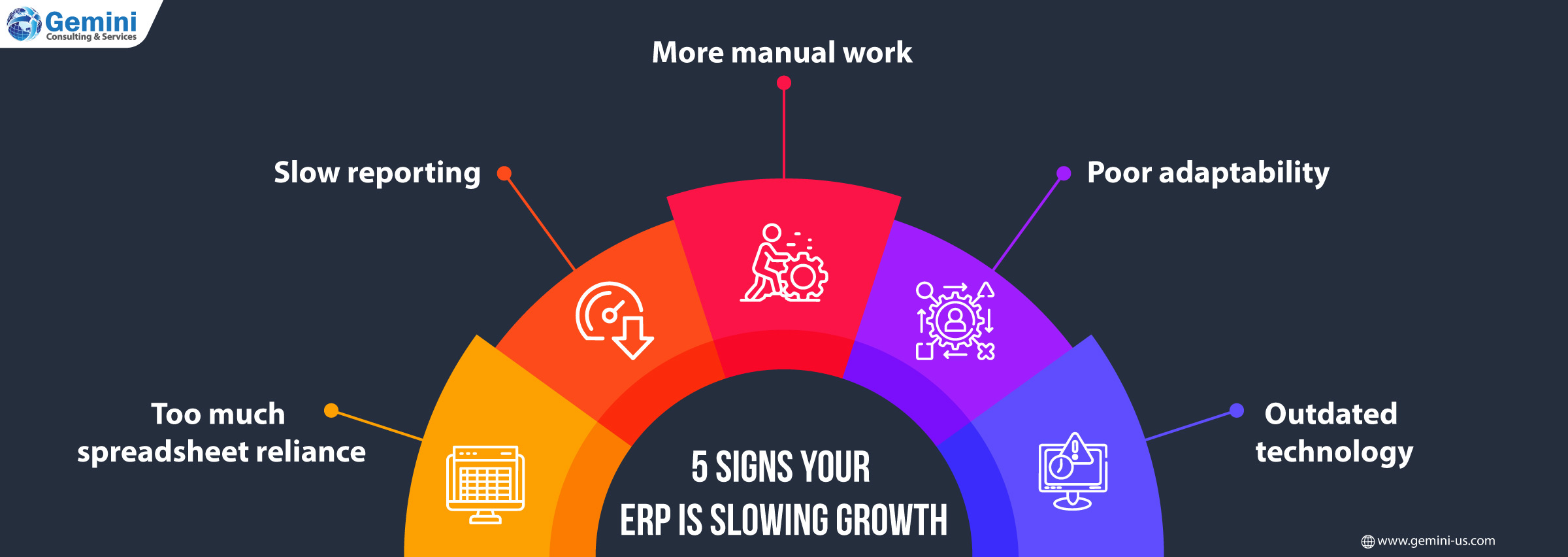
1. Your Team Relies Too Heavily on Spreadsheets
Spreadsheets have their place, but they should not be essential for keeping your core business processes running.
If employees regularly export ERP data into Excel to reconcile accounts, create reports, track inventory, or combine information from different departments, your ERP may not be providing the functionality your business needs.
Heavy spreadsheet dependence can lead to:
- Duplicate data entry
- Version-control problems
- Calculation errors
- Inconsistent information
- Time-consuming manual checks
Consider a business operating across several locations. If every site maintains its own spreadsheet and finance department has to combine those files at month-end, producing accurate consolidated figures can become a lengthy exercise.
The business impact: Employees spend valuable time managing data instead of using it, while the risk of errors increases.
2. Reporting Takes Days Instead of Minutes
Business leaders need timely information. Waiting several days for a financial report or operational update can mean making important decisions using information that is already out of date.
An ERP should provide access to current information across areas such as finance, sales, purchasing, inventory, and operations.
If answering a straightforward question, such as your current cash position, outstanding orders, inventory levels, or profitability, requires multiple reports and manual reconciliation, visibility is becoming a problem.
Modern ERP environments can provide dashboards, automated reporting, analytics, and real-time insights that help decision-makers understand what is happening across the business.
The business impact: Slow reporting can delay decisions, hide emerging problems, and cause businesses to miss opportunities.
3. Business Growth Creates More Manual Work
Growth should increase revenue and opportunity, not administrative workload at the same rate.
If entering new markets, processing more orders, managing additional suppliers, or handling a larger customer base requires significant increases in manual work, your ERP may not be scaling effectively.
For example, a company that doubles its transaction volumes should not necessarily need to double the finance team simply to keep up with reconciliations, data entry, and reporting.
Automation can streamline repetitive activities such as invoice processing, approvals, reconciliations, purchasing workflows, and financial reporting.
The business impact: Excessive manual work increases operating costs, limits scalability, and creates more opportunities for human error.
4. Your ERP Struggles With Change
Businesses rarely stay the same. You may open another location, introduce new products, acquire another company, expand internationally, change your operating model, or integrate a new customer-facing platform.
Your ERP should make these changes manageable.
If every new requirement involves expensive customisation, complicated workarounds, or another standalone application, your system may be restricting business agility.
Disconnected technology can also create information silos. When your ERP does not integrate effectively with CRM, e-commerce, payroll, inventory, or other business applications, employees may have to transfer information manually between systems.
The business impact: The harder it is to adapt your ERP, the harder it becomes to respond quickly to new opportunities and changing customer demands.
5. Your Technology Is Falling Behind
Technology is changing rapidly. Cloud platforms, automation, advanced analytics, artificial intelligence, and process intelligence are becoming increasingly important to organizations looking to improve productivity and competitiveness.
An ageing ERP can make it difficult to take advantage of these capabilities.
This does not mean every business needs to adopt every new technology immediately. The bigger question is whether your current ERP provides a foundation for future improvements.
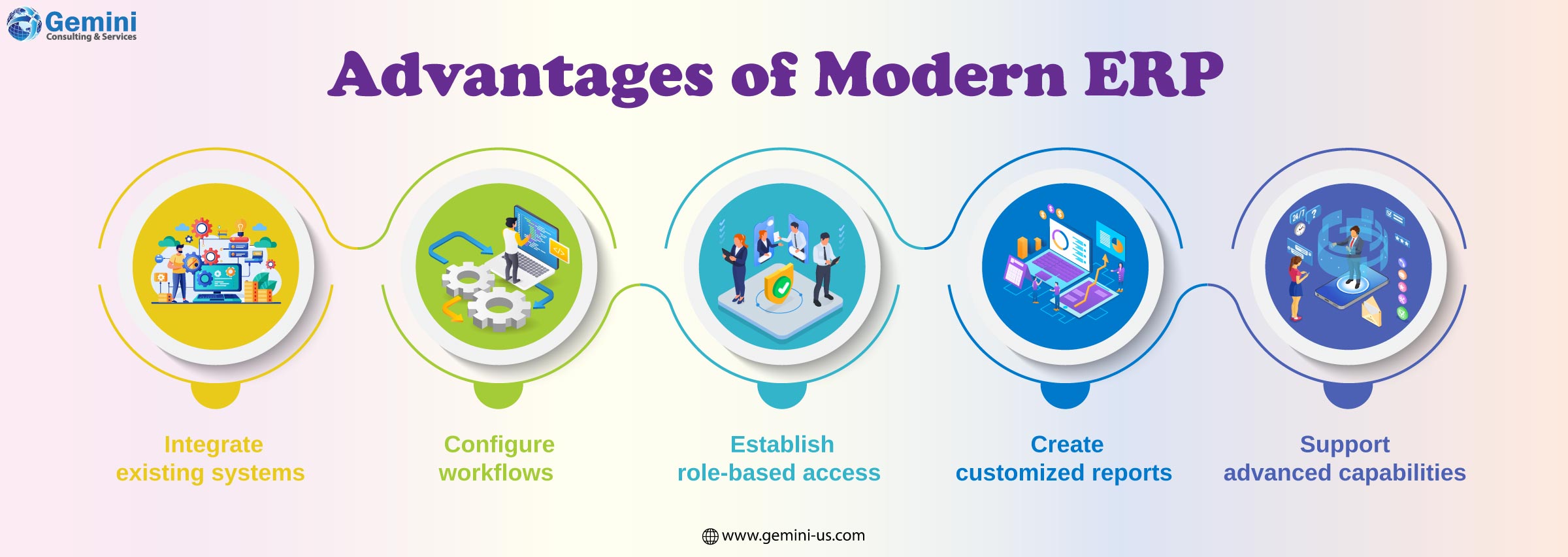
- Cloud-based scalability
- Automated workflows
- Advanced reporting and analytics
- AI-enabled insights
- Connected business applications
- Real-time operational visibility
The business impact: Technology limitations can prevent your organization from improving processes and may leave competitors with more efficient ways of working.
The Hidden Cost of Keeping an Outdated ERP
Replacing an ERP involves investment, which is why many organizations continue using legacy systems long after their limitations become apparent.
However, the cost of staying with an outdated platform is not always visible on an IT budget.
It can appear as lost employee productivity, rising finance costs, reporting delays, operational errors, integration problems, maintenance expenses, and missed opportunities.
Over several years, these indirect costs can be far greater than they initially appear.
Is Your ERP Ready for the Next Stage of Growth?
Instead of asking whether your ERP still works, business leaders should ask whether it is helping the organization move forward.
Consider these questions:
- Can we access accurate information when we need it?
- Are our core processes sufficiently automated?
- Can our ERP handle increased transaction volumes?
- Can we add locations, products, users, or entities without major disruption?
- Does it integrate effectively with our other business systems?
- Can it support modern analytics, automation, and AI capabilities?
- Are employees spending too much time working around the system?
If several answers are no, it may be time to assess whether ERP modernization makes sense.
Gemini Consulting & Services can provide you with an accurate analysis of the performance of your current ERP system. Contact us to learn whether your ERP system needs an overhaul and if so, which is the best system suitable for your business needs.
ERP Should Enable Growth, Not Restrict It
An ERP is more than a system for recording transactions. When properly aligned with business strategy, it can provide the foundation for better visibility, streamlined processes, stronger collaboration, and sustainable growth.
The right question is not simply, "Does our ERP still work?"
It is "Is our ERP helping us build the business we want to become?"
If your teams are spending too much time fixing data, compiling reports, managing spreadsheets, and working around system limitations, your ERP may no longer be an enabler of growth. Recognizing the warning signs early gives you the opportunity to modernize before those limitations become a much bigger business problem.