As businesses generate more data than ever before, deciding where that data should be processed and stored has become a major technology challenge. In 2026, organizations are increasingly choosing between two powerful computing models: cloud computing and edge computing. Each approach offers unique strengths, and the right choice depends entirely on workload requirements, speed expectations, scalability, and operational needs.
Cloud computing remains the preferred option for large-scale storage, AI model training, and enterprise applications. Edge computing, on the other hand, is designed for real-time processing, low latency, and local decision-making. Rather than replacing one another, these technologies now work together to create flexible hybrid infrastructures for modern AI and IoT ecosystems.
Understanding Cloud Computing
Cloud computing relies on centralized data centers operated by providers such as Amazon Web Services (AWS), Microsoft Azure, and Google Cloud. Data generated by applications or devices is transmitted over the internet to these remote servers for processing and storage.
This model is highly effective for workloads that require massive computational resources or global accessibility. Businesses use the cloud for big data analytics, enterprise software, machine learning training, content delivery, and long-term data archiving.
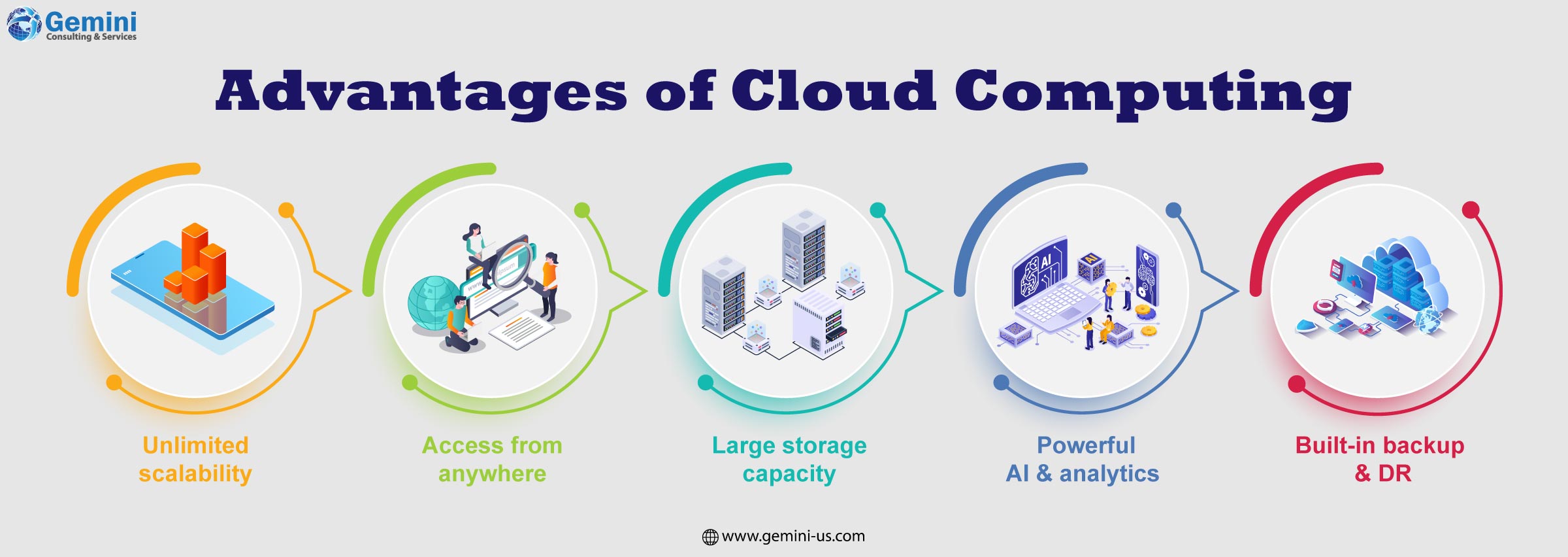
- Virtually unlimited scalability
- Access from anywhere in the world
- Large storage capacity
- Powerful AI and analytics services
- Built-in backup and disaster recovery systems
Challenges of Cloud Computing
Despite its advantages, cloud computing introduces certain limitations. Since data must travel through networks to distant data centers, latency can become an issue for applications requiring instant responses. Cloud systems also depend heavily on stable internet connectivity. In addition, bandwidth and data transfer costs can rise significantly when large amounts of information are continuously transmitted. As a result, cloud-only architectures may not be suitable for all modern applications.
Understanding Edge Computing
Edge computing moves processing closer to the source of data generation. Instead of sending every piece of information to the cloud, edge devices process data locally on sensors, gateways, or nearby servers.
This architecture is especially valuable for Internet of Things (IoT) devices, autonomous systems, industrial automation, healthcare monitoring, and smart surveillance systems.
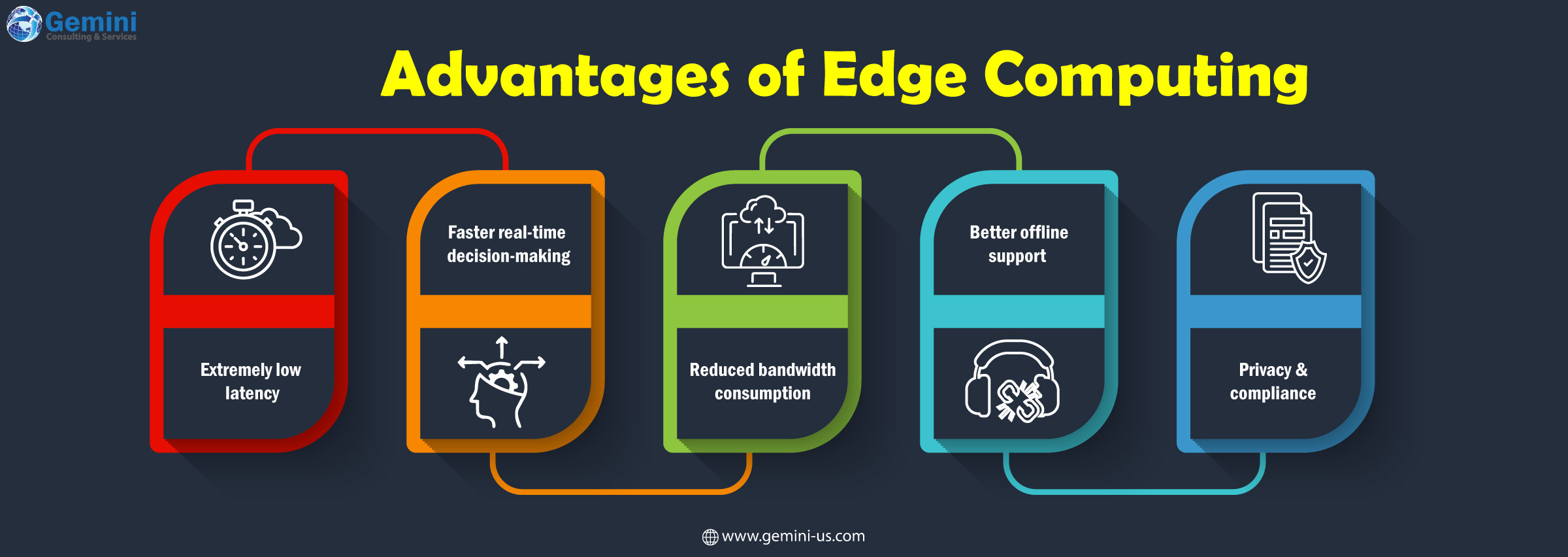
- Extremely low latency
- Faster real-time decision-making
- Reduced bandwidth consumption
- Better support for offline operations
- Improved local privacy and compliance
Challenges of Edge Computing
Although edge systems provide speed and responsiveness, they also have limitations. Compared to cloud data centers, edge devices generally possess less computing capability and limited storage resources. Managing thousands of distributed devices can also become complex. In addition, physical devices may be vulnerable to tampering or hardware failures.
Edge AI vs Cloud AI
Artificial intelligence has accelerated the need for smarter computing architectures. Organizations now face an important decision: should AI models run in the cloud or directly at the edge?
Latency and Speed
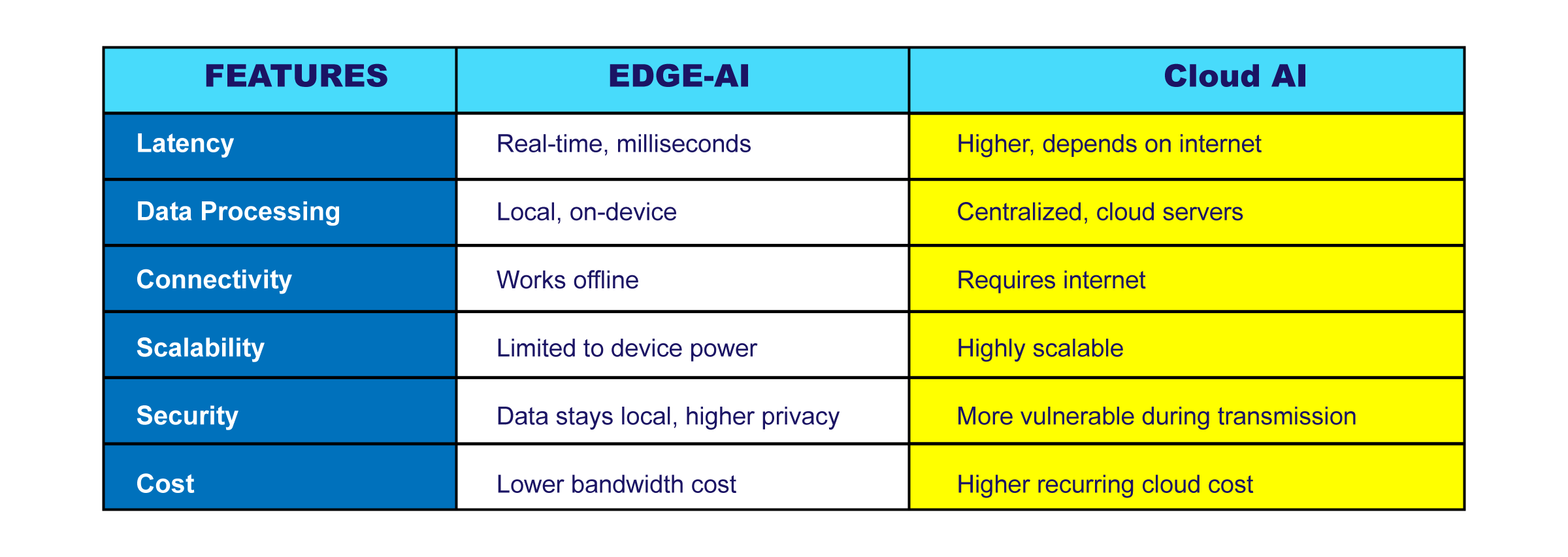
Cloud AI requires data to travel from a device to a centralized server before processing occurs. This journey can create delays ranging from milliseconds to several seconds depending on network conditions.
Edge AI processes information directly on local hardware or nearby gateways, significantly reducing response times. This makes edge computing essential for applications such as robotics, autonomous vehicles, and industrial automation where even minor delays can create operational risks.
Connectivity
Cloud-based AI systems rely on constant internet access. If connectivity fails, the application may stop functioning properly.
Edge AI ensures better operational reliability by performing data processing directly on local devices. Devices can continue operating even in remote or low-connectivity environments. This reliability is particularly valuable in healthcare wearables, rural infrastructure, and defence applications.
Cost Considerations
Cloud computing generally has lower upfront infrastructure costs because businesses can rent resources on demand. With time, however, operational expenses can go up for enterprises due to storage fees, bandwidth usage, and data transfer charges.
Edge computing often requires higher initial investment in specialized hardware such as GPUs or AI accelerators. However, processing data locally reduces long-term transmission costs because only filtered insights or summaries are sent to the cloud.
Storage and Scalability
When it comes to massive storage and AI training, the cloud remains unmatched. Large language models, enterprise analytics, and complex simulations require scalable infrastructure that only centralized cloud platforms can provide.
Edge devices are better suited for inference tasks and lightweight local processing rather than large-scale model training.
When to Choose Cloud Computing
Cloud computing is the best option when organizations require scalability, centralized coordination, or advanced analytics capabilities.
Common Cloud Use Cases
- Training machine learning models
- Running enterprise SaaS platforms
- Managing global applications
- Performing large-scale data analytics
- Long-term data storage and backup
For example, an e-commerce platform analyzing millions of customer interactions every day benefits greatly from cloud infrastructure due to its scalability and processing power.
When to Choose Edge Computing
Edge computing becomes essential when real-time responsiveness and local processing are critical.
Common Edge Use Cases
- Autonomous vehicles
- Smart manufacturing systems
- IoT sensor networks
- AR/VR applications
- Security and facial recognition systems
For instance, it is not advisable for self-driving vehicles to rely on cloud servers for immediate obstacle detection. Any delay can endanger lives, and edge computing is bets suitable for these systems for instant responses.
Why Cloud-Only Models Fall Short for Modern IoT
As IoT ecosystems continue to expand, relying entirely on cloud infrastructure creates several operational problems.
Data Overload
Modern sensors and cameras generate enormous amounts of data. Continuously sending high-resolution video streams or sensor feeds to the cloud increases network congestion and operational costs.
Reliability Risks
Mission-critical environments require near-perfect uptime. Even leading cloud providers experience occasional outages. Systems such as smart traffic control or industrial automation cannot afford disruptions caused by connectivity failures.
Unpredictable Network Delays
Internet traffic is inherently unpredictable. Sudden spikes in congestion can delay data transmission, making cloud-only systems unsuitable for deterministic real-time operations like robotic surgery or factory automation.
The Rise of Hybrid Edge-Cloud Architecture
By 2026, the strongest approach will be to integrate both cloud and edge technologies rather than relying on just one. Hybrid architectures allow organizations to use edge computing for real-time processing while leveraging the cloud for analytics, coordination, and long-term storage.
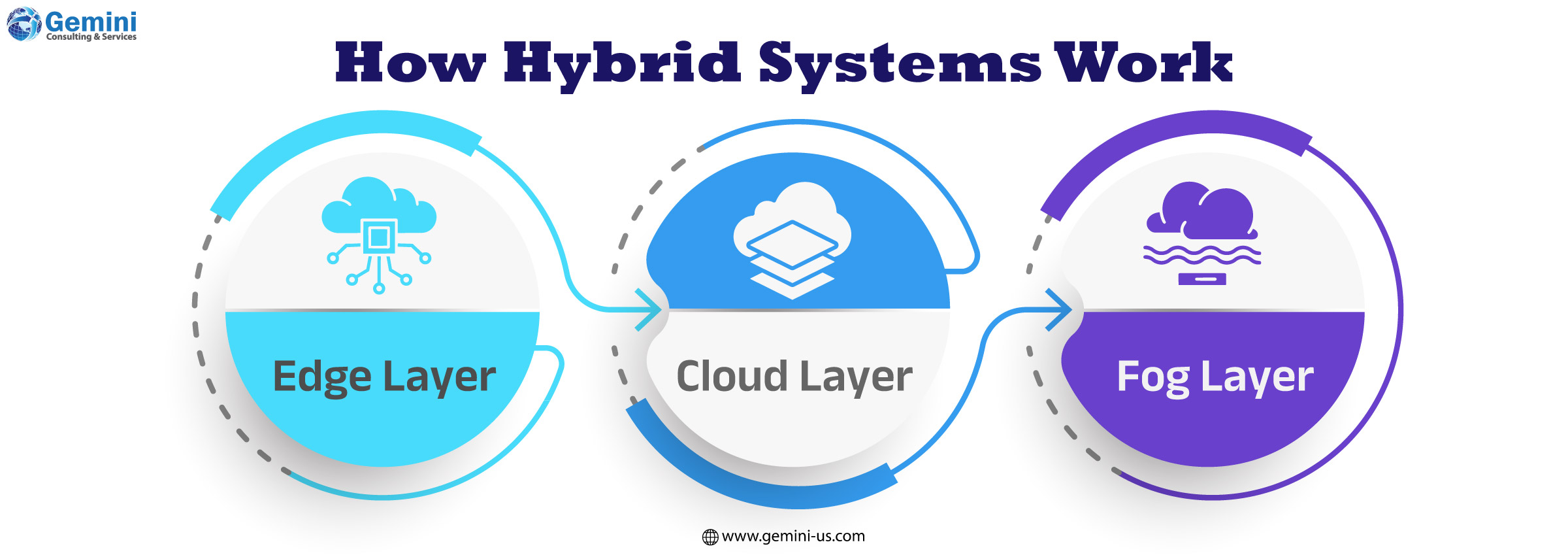
- Edge Layer: Handles immediate processing and local decisions
- Cloud Layer: Manages storage, AI training, and large-scale analytics
- Fog Layer (Optional): Acts as an intermediary processing layer between edge and cloud systems
Real-World Examples
In smart factories, edge devices monitor equipment performance and instantly trigger shutdowns if anomalies are detected. Meanwhile, operational data is periodically uploaded to the cloud for predictive maintenance analysis and optimization.
Similarly, intelligent surveillance systems process video feeds locally to identify threats in real time while storing important events and analytics data in the cloud.
Gemini Consulting & Services offers cloud solutions that can scale with your enterprise and bring down operational expenses. Contact us to discover how our experts can provide you a strategic roadmap to implement customized cloud solutions.
Conclusion
The decision between edge computing and cloud computing depends on the nature of your workloads. If your applications require real-time responsiveness, offline functionality, or local processing, edge computing is the ideal solution. If your organization needs massive scalability, centralized analytics, or AI model training, cloud computing remains the better choice.
However, the future belongs to hybrid architectures that combine the strengths of both models. By using edge systems for immediate intelligence and the cloud for long-term learning and coordination, businesses can build scalable, efficient, and resilient digital ecosystems for the AI-driven era.