
Agriculture is undergoing a major transformation as 5G networks, IoT devices, and AI converge to create fully connected, highly efficient farms. Instead of relying on manual observation and generalized farming practices, modern operations now use real-time data, automated equipment, and advanced analytics to boost yields, reduce waste, and cut labor demands.
How 5G and IoT Enable Connected Agriculture
High-speed, low-latency communication: 5G delivers the speed and responsiveness needed to handle constant data flow from sensors, drones, and automated machinery. This near-instant communication allows farmers to monitor conditions and respond to changes in real time.
Mass device connectivity: Large farms deploy thousands of IoT devices, such as soil sensors, weather monitors, robotic equipment, and livestock trackers. 5G supports dense sensor networks, enabling continuous data gathering on soil moisture, crop conditions, water usage, pests, and animal health.
AI and machine learning integration: With richer datasets, AI tools can forecast disease outbreaks, optimize irrigation, detect nutrient deficiencies, automate repetitive tasks, and guide long-term decision-making.
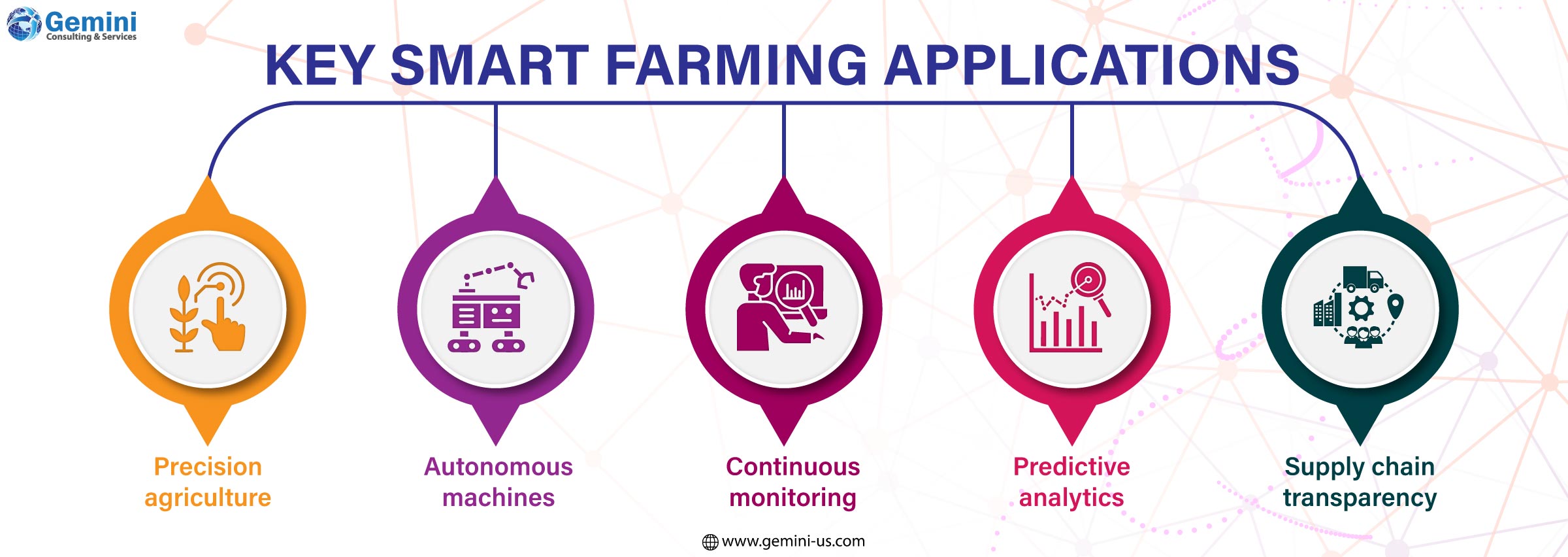
Precision agriculture: Farmers can adjust and customize irrigation, fertilizer, and pesticide use based on field-level data rather than applying inputs uniformly. This reduces costs and environmental impact.
Autonomous machines: Self-driving tractors, drones, and robotic harvesters can plant, spray, map fields, and even pick produce with minimal human involvement.
Continuous monitoring: IoT sensors and remote cameras allow farmers to track soil conditions, livestock health, and crop status from anywhere. Augmented-reality glasses even let technicians provide remote assistance.
Predictive analytics: AI-powered models use historical and real-time data to estimate yields, determine best planting dates, and identify threats before they spread.
Supply chain transparency: Blockchain-enabled tracking ensures secure, traceable movement of produce from the farm to distributors and consumers.
Why Modern Farming Needs 5G
Traditional agriculture struggles with inefficient resource use, inconsistent monitoring, slow decision-making, and heavy reliance on manual labor. 5G-based systems help overcome these limitations by supporting automation, improving data accuracy, and enabling real-time responses.
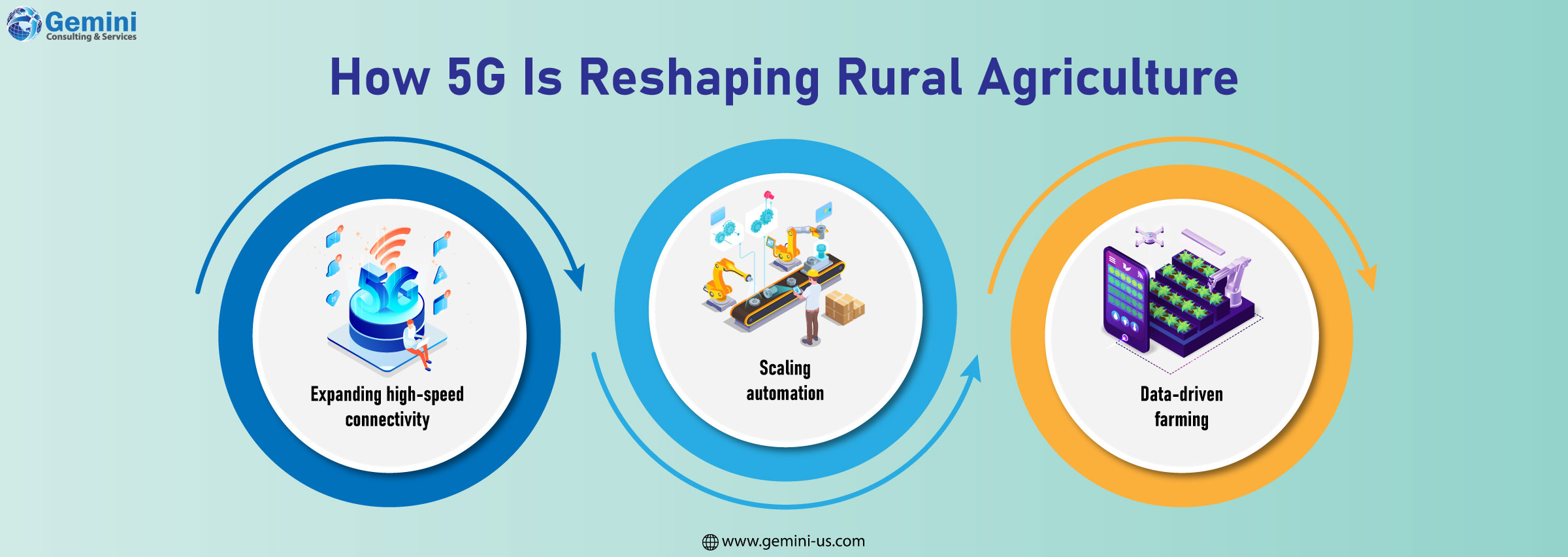
Expanding high-speed connectivity: 5G extends broadband-level service to remote farming regions, connecting devices and equipment previously limited by poor coverage.
Scaling automation: As autonomous tractors, drones, and harvesters become more advanced, 5G provides the stable, low-latency communication they need to operate safely and collaboratively.
Data-driven farming: With constant access to big data, farmers can make evidence-based decisions that improve crop quality and overall productivity while conserving water and energy.
Practical 5G Use Cases in Agriculture
1. IoT Monitoring for Smarter Decisions
Thousands of networked sensors gather live data on soil conditions, temperature, irrigation needs, and plant health. This information helps farmers reduce waste, improve efficiency, and respond quickly to emerging issues.
2. Drone-Based Crop Analysis
Drones equipped with 5G connectivity capture high-resolution imagery and environmental data. They can detect pests or disease early, monitor crop growth, and map field variability far more efficiently than manual inspections.
3. Intelligent Irrigation
Connected irrigation systems automatically adjust water levels using soil moisture readings and weather forecasts. This prevents overwatering, conserves resources, and maintains optimal growing conditions.
Growing Role of 5G in Agri-Tech
Smart farming technologies now span everything from soil monitoring to livestock tracking. Many devices rely on short-range connections like Wi-Fi or Bluetooth, while large farms depend on cellular IoT and private 5G networks for broader coverage and centralized data management.
With experience digital consultants, Gemini Consulting & Services is well-placed to offer 5G and IoT based services to the enterprises engaged in farming. Contact us to know more about our digital offerings that can enhance farm yields and reduce input costs.
These connected systems track critical factors such as water quality, contaminants, animal behavior, and microclimate conditions, giving farmers a comprehensive view of their operations.
Preparing for the Future of Farming
Countries around the world are investing in agricultural innovation programs, training farmers in digital skills, and building private 5G networks for large-scale farms. As these networks grow, farms will be able to aggregate enormous streams of sensor data, support autonomous equipment, and run complex analytics models with greater accuracy.
Advanced 5G Agricultural Use Cases
Centralized data aggregation: Corporate farming operations can cluster thousands of sensors to monitor soil moisture, weather, and irrigation needs in far greater detail than ever before.
Predictive analytics: AI models use 5G-fed datasets to predict crop performance, determine ideal treatment strategies, and streamline resource planning.
AI-driven automation: With reliable high-speed connections, AI can power automated irrigation, pest detection, equipment maintenance, and crop forecasting.
Robotics: Robotic equipment—from self-driving mowers to automated harvesters—relies on 5G networks to exchange large data volumes and operate safely.
Drone operations: 5G enables drones to transmit high-definition video for real-time crop inspection, mapping, and autonomous scouting.
Animal monitoring: Smart collars and ear tags track livestock movement, health, and stress levels, helping farmers reduce losses and improve welfare.
Autonomous vehicles: Tractors and transport vehicles equipped with onboard computers can manage planting, spraying, and transport with minimal human oversight.
Enhanced weather monitoring: Connected weather stations provide hyperlocal climate data, giving farmers early warnings about storms, droughts, temperature shifts, and other risks.
The Road Ahead
As 5G expands and AI becomes more capable, farms will transition from manual routines to automated, data-driven ecosystems. These technologies promise higher yields, reduced environmental impact, better resource management, and more resilient food production systems capable of supporting the world’s growing population.