
In today’s highly competitive technology landscape, IT companies must do more than simply build innovative products. They must ensure that their sales and marketing teams operate in harmony to deliver consistent value to customers. When these two departments work in isolation, organizations often face missed opportunities, inefficient campaigns, and slower revenue growth.
Sales and marketing alignment has therefore become a critical strategy for IT firms looking to scale effectively. By fostering collaboration, sharing insights, and leveraging integrated technology platforms, companies can create a seamless customer journey, from the first interaction with a brand to long-term customer retention.
This article explores how IT companies can achieve strong sales and marketing alignment and why doing so is essential for sustainable business success.
Understanding Sales and Marketing Alignment
Sales and marketing alignment refers to a strategic collaboration between the two departments with the shared objective of driving revenue growth. Instead of functioning independently, both teams coordinate their activities, share data, and work toward common business goals.
In IT organizations, this alignment is particularly important because technology solutions often involve complex buying processes. Prospective clients typically research products extensively, compare vendors, and require personalized demonstrations before making a decision. When sales and marketing teams collaborate closely, they can guide potential customers through each stage of the buying journey with consistent messaging and relevant information.
Aligned teams also create a more cohesive customer experience. Marketing generates qualified leads, while sales provides direct feedback from customers to improve campaigns and messaging. This collaborative cycle shortens the sales process, increases conversion rates, and ultimately boosts revenue.
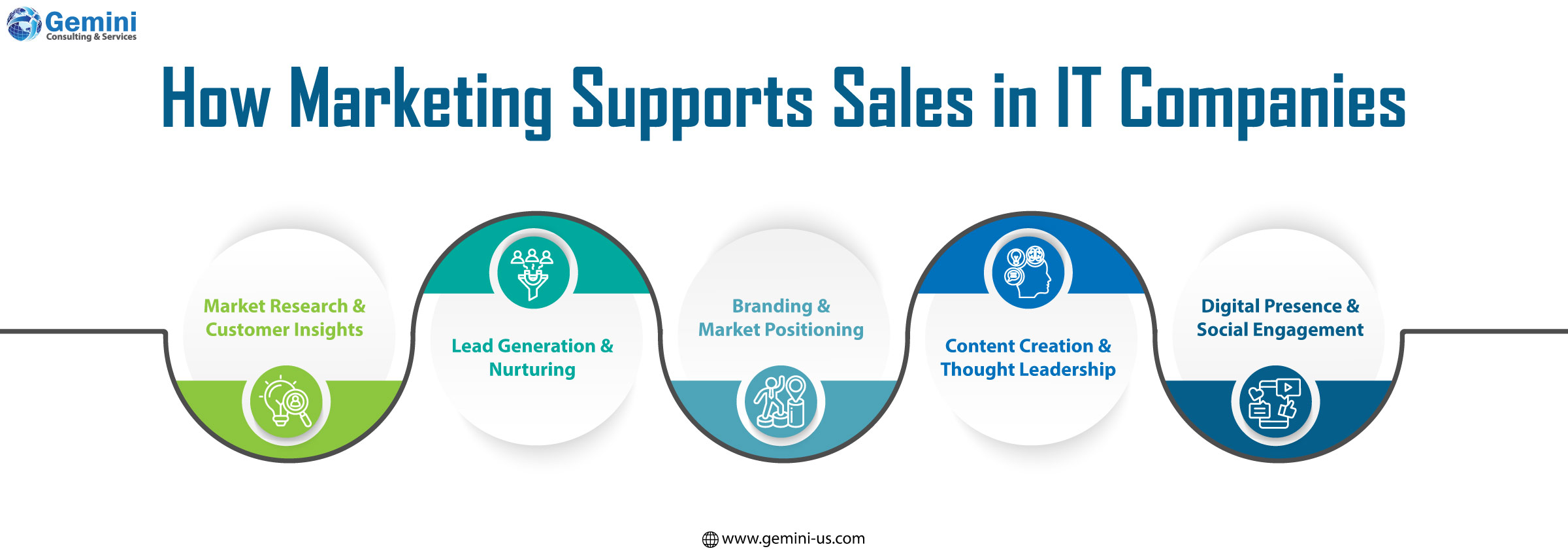
Marketing plays a significant role in enabling the sales team to succeed. By generating awareness and nurturing potential customers, marketing ensures that sales representatives focus on the most promising opportunities.
1. Market Research and Customer Insights
Marketing teams conduct detailed research to understand market trends, competitor strategies, and customer pain points. In the IT industry, where technologies evolve rapidly, these insights help sales teams tailor their conversations to address real business challenges.
For example, if marketing identifies that companies are prioritizing cybersecurity solutions, sales representatives can emphasize how their products address security concerns during client discussions.
2. Lead Generation and Nurturing
Demand generation is one of marketing’s core responsibilities. Through strategies such as content marketing, search engine optimization, webinars, and targeted campaigns, marketing attracts potential customers and moves them through the early stages of the sales funnel.
Leads are then nurtured with relevant content, such as case studies, whitepapers, or product demonstrations, until they are ready for direct engagement with sales teams.
3. Branding and Market Positioning
In the crowded IT sector, differentiation is essential. Marketing teams craft the brand identity, messaging, and value proposition that set a company apart from competitors.
Strong branding enables sales teams to communicate a clear narrative about how their solutions solve customer problems and deliver measurable value.
4. Content Creation and Thought Leadership
Marketing teams produce educational and informative content designed to position the company as an industry authority. This may include blog articles, technical guides, research reports, and webinars.
Such resources help sales teams establish credibility with potential clients and demonstrate expertise in solving complex technological challenges.
5. Digital Presence and Social Engagement
A strong online presence plays a vital role in modern B2B technology sales. Marketing manages the company’s website, social media platforms, and digital campaigns to engage prospects and generate leads.
This visibility helps sales teams initiate conversations with prospects who are already familiar with the company’s solutions.
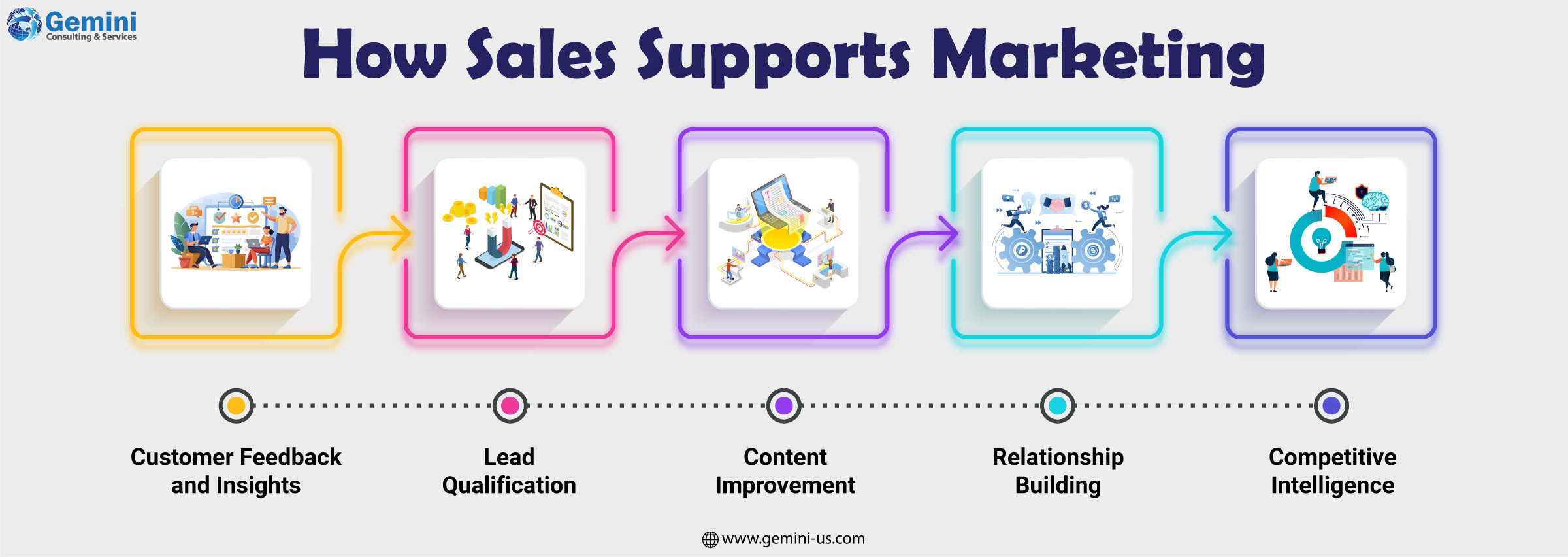
While marketing generates awareness and leads, the sales team provides valuable frontline insights that help refine marketing strategies.
1. Customer Feedback and Insights
Sales representatives interact directly with customers and understand their concerns, preferences, and buying motivations. This feedback allows marketing teams to refine messaging and develop campaigns that resonate with target audiences.
2. Lead Qualification
Sales teams evaluate leads generated by marketing to determine whether they are suitable prospects. This process ensures that marketing focuses on high-quality leads rather than simply increasing volume.
3. Content Improvement
Sales teams often know which marketing materials resonate most with customers. Their feedback helps marketing refine case studies, presentations, and product documentation.
4. Relationship Building
Sales representatives build long-term relationships with clients. These interactions provide valuable insights into purchasing behavior and emerging needs, which marketing can use to design more personalized campaigns.
5. Competitive Intelligence
Sales teams frequently encounter competitor offerings during client discussions. Their observations provide marketing teams with valuable insights that help refine positioning strategies and highlight unique advantages.
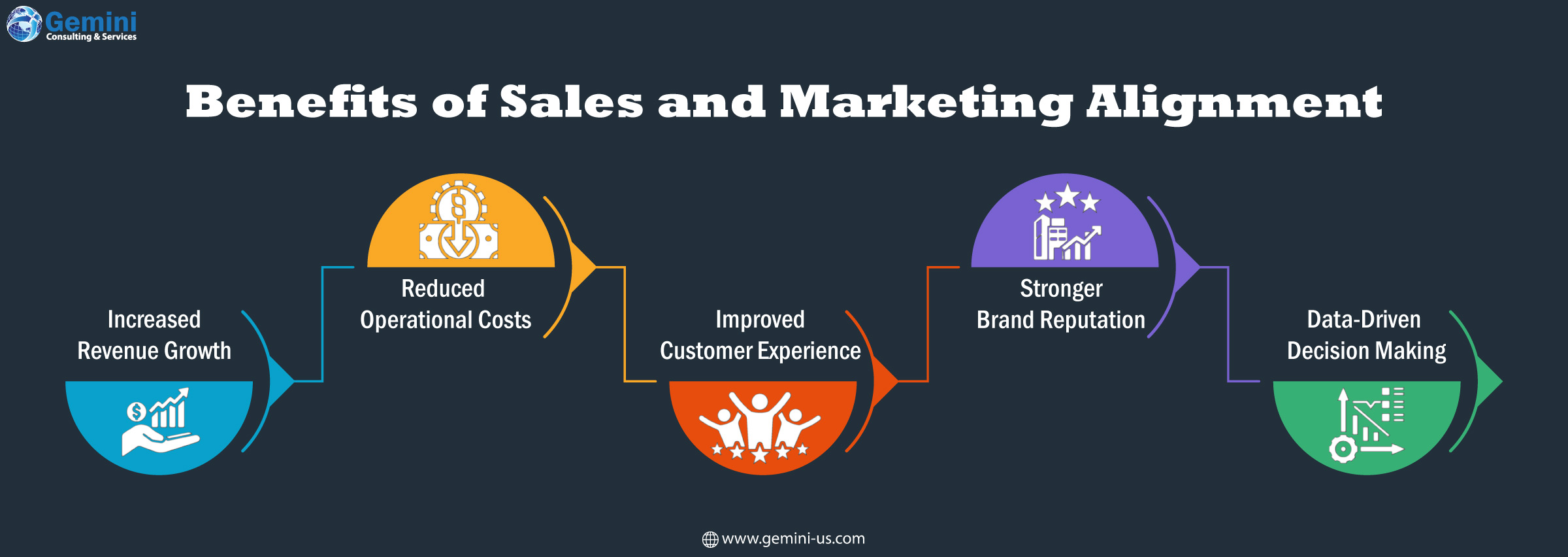
When IT companies align sales and marketing effectively, several important advantages emerge.
Increased Revenue Growth
Aligned teams collaborate to generate qualified leads and close deals more efficiently. By working toward shared targets, both departments contribute directly to revenue generation.
Reduced Operational Costs
Coordination eliminates duplicate efforts and streamlines campaign execution. Resources can be allocated more effectively, improving overall operational efficiency.
Improved Customer Experience
Customers benefit from consistent messaging and personalized interactions throughout the buying journey. A seamless experience increases satisfaction and encourages long-term loyalty.
Stronger Brand Reputation
When marketing and sales communicate a unified brand message, the organization appears more credible and professional in the marketplace.
Data-Driven Decision Making
Shared analytics and insights enable both teams to make informed decisions. This data-driven approach improves campaign performance and sales strategies.
Breaking Down Silos Between Teams
One of the biggest challenges in achieving alignment is overcoming departmental silos. Sales and marketing teams often operate with different priorities and metrics, which can create friction.
To overcome this challenge, organizations should encourage open communication and collaboration. Regular cross-functional meetings allow teams to share updates, discuss challenges, and identify opportunities for improvement.
Another effective strategy is establishing shared goals and incentives. When both teams are evaluated based on common performance metrics, such as revenue growth or pipeline contribution, they become more motivated to collaborate.
Creating opportunities for informal interaction, such as workshops or joint training sessions, can also strengthen relationships between teams and encourage knowledge sharing.
Defining Clear Roles and Responsibilities
For alignment to succeed, both departments must clearly understand their roles within the revenue generation process.
Define Objectives and Key Performance Indicators
Organizations should establish measurable objectives for both teams. These metrics may include revenue targets, conversion rates, or customer acquisition costs.
Assign Specific Responsibilities
Responsibilities such as lead generation, lead qualification, content development, and deal closure should be clearly defined to avoid confusion.
Empower Teams to Make Decisions
Providing autonomy allows both sales and marketing teams to adapt quickly to market changes while remaining aligned with broader business goals.
Review Roles Regularly
Market dynamics evolve rapidly in the IT sector. Periodically reviewing responsibilities ensures that strategies remain relevant and effective.
Creating a Unified Revenue Strategy
A unified sales and marketing strategy ensures that both departments move in the same direction.
Joint planning sessions allow teams to align campaign goals with sales priorities. Marketing campaigns should directly support sales initiatives, while sales teams should provide insights that shape future campaigns.
A shared content calendar can also help coordinate activities, ensuring that messaging remains consistent across channels and throughout the sales funnel.
Leveraging Technology for Integration
Technology is essential for bringing sales and marketing teams into alignment.
Customer Relationship Management (CRM) platforms offer a shared system for monitoring customer interactions, managing leads, and tracking sales opportunities. When both departments work from the same set of data, they gain a clearer and more comprehensive view of the entire customer journey.
Automation tools can simplify routine processes such as email marketing, lead qualification, and social media scheduling. By reducing the time spent on repetitive tasks, these tools allow teams to concentrate on more strategic activities, including strengthening customer relationships and closing sales.
Platforms that integrate CRM, marketing automation, and analytics create a connected ecosystem that supports smooth collaboration between sales and marketing teams.
At Gemini Consulting & Services, we leverage advanced technologies to design tailored strategies for every client. These automated solutions help us understand each client’s business goals and deliver measurable outcomes. Contact us to discover how our sales and marketing experts can guide your organization with a digital roadmap for technological transformation.
Key Strategies for IT Companies
To strengthen alignment, IT organizations should focus on several practical strategies:
- Establish shared goals and metrics: Both teams should track revenue-related KPIs rather than isolated departmental metrics.
- Define a common ideal customer profile: Sales and marketing must target the same audience segments and buyer personas.
- Integrate data systems: A shared CRM and analytics platform ensures that both teams work with the same information.
- Align content with the sales funnel: Marketing should create content that supports every stage of the buying journey, especially materials that help sales close deals.
- Encourage continuous communication: Regular meetings, feedback loops, and collaborative planning sessions strengthen coordination between teams.
Conclusion
For IT companies seeking long-term growth, sales and marketing alignment is no longer optional, it is essential. When both teams collaborate effectively, they create a unified strategy that attracts the right customers, delivers consistent messaging, and accelerates revenue generation.
By breaking down silos, defining clear roles, leveraging integrated technologies, and establishing shared goals, technology organizations can transform their sales and marketing departments into a powerful, unified revenue engine. The result is improved efficiency, stronger customer relationships, and sustained competitive advantage in the evolving digital marketplace.