
In today’s fast-moving, digitally powered economy, business efficiency goes far beyond cutting expenses. It now depends on speed, scalability, adaptability, seamless customer experiences, and the ability to make real-time, data-backed decisions. As competition intensifies, organizations are rethinking how they operate, collaborate, and create value. In this environment, digital transformation services have shifted from being optional IT upgrades to becoming core strategic initiatives.
Digital transformation involves reimagining business models, modernizing legacy systems, and equipping teams with the tools and skills needed to work smarter and faster. When executed correctly, it reshapes the entire organization, driving measurable improvements in productivity, cost management, and long-term growth.
Understanding Digital Transformation Services
Digital transformation services provide a structured framework for integrating digital technologies across all areas of a business. These services typically include process automation, cloud adoption, data analytics, artificial intelligence (AI), enterprise system modernization, and digital strategy consulting.
Unlike traditional IT projects that focus solely on infrastructure upgrades, digital transformation aligns technology with strategic business objectives. The aim is to eliminate inefficiencies, reduce reliance on manual processes, strengthen collaboration, and enable informed decision-making at every level of the organization.
When technology and business strategy are aligned, transformation becomes a catalyst for operational excellence rather than just a technical upgrade.
Streamlining Operations with Automation
One of the fastest ways to improve efficiency is through automation. Manual processes can often be inefficient and lead to errors. By introducing intelligent automation tools—including robotic process automation (RPA)—organizations can replace repetitive tasks with reliable, scalable systems.
Automation can be applied to activities such as data entry, invoicing, reporting, approvals, customer service workflows, and inventory monitoring.
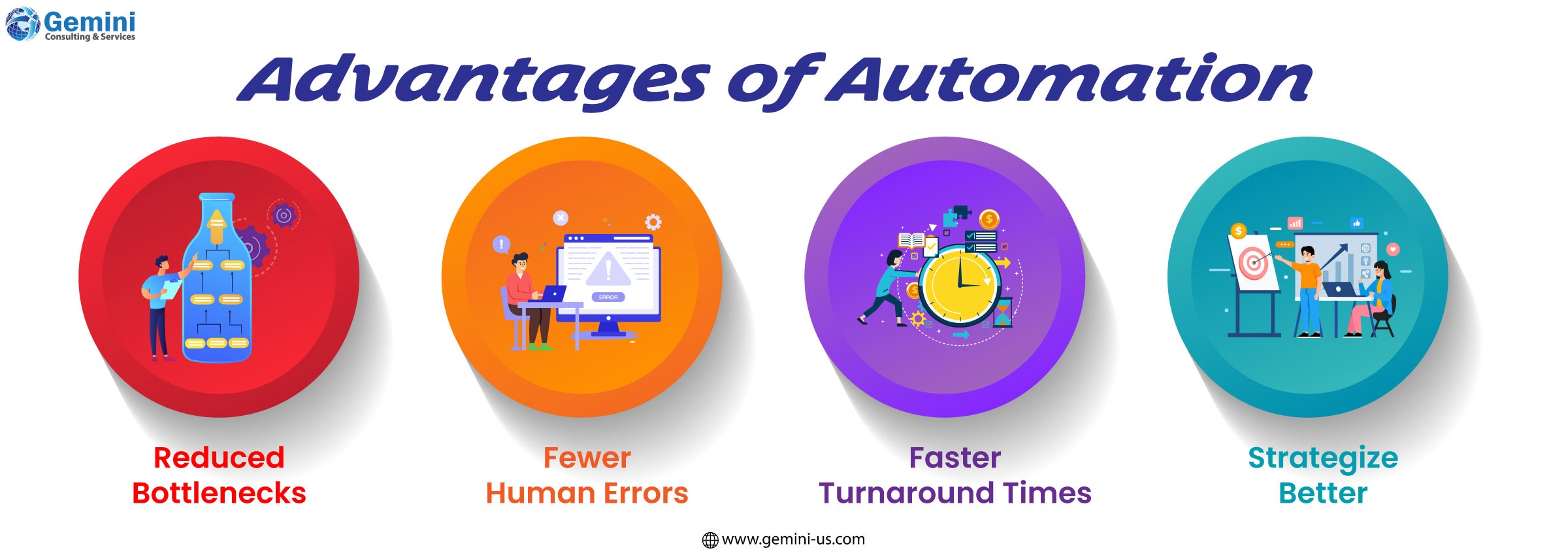
Departments such as finance, HR, operations, and customer service often experience measurable improvements within months of implementing automation initiatives.
Driving Agility Through Cloud Adoption
Traditional on-premise infrastructure can restrict scalability and slow innovation. Cloud computing changes how organizations manage and access technology by offering flexible, on-demand resources.
Cloud-based environments enable businesses to:
- Access systems and data from anywhere
- Flexible adjustment of resources based on demand
- Lower maintenance and infrastructure costs
- Improve reliability and system performance
Cloud solutions also accelerate product and service deployment cycles, allowing companies to respond more quickly to market opportunities. From an efficiency perspective, cloud adoption reduces downtime, enhances collaboration, and ensures systems evolve alongside business needs.
Turning Data into Actionable Insight
Data is one of the most powerful assets in a digital enterprise—but only if it is accurate, accessible, and actionable. Digital transformation initiatives often include data analytics and business intelligence solutions that centralize information across departments and eliminate silos.
With real-time dashboards and advanced analytics, leadership teams can:
- Detect inefficiencies early
- Continuously monitor performance metrics
- Make faster, evidence-based decisions
- Improve forecasting and resource allocation
By replacing guesswork with data-driven insights, businesses can optimize operations and improve strategic planning.
Enhancing Collaboration and Workforce Productivity
Efficiency is closely tied to how effectively teams work together. Modern collaboration platforms and integrated digital workplaces enable real-time communication and seamless information sharing—regardless of physical location.
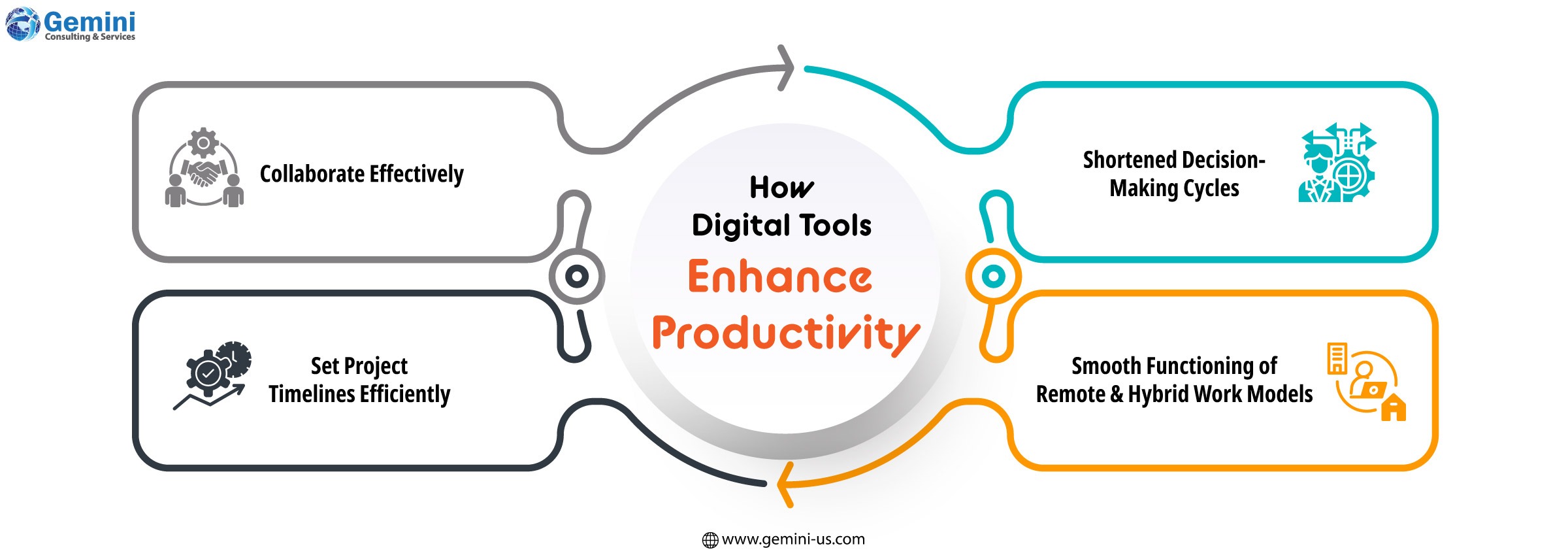
With the right digital tools in place:
- Cross-functional teams collaborate more effectively
- Project timelines become more predictable
- Decision-making cycles shorten
- Remote and hybrid work models function smoothly
A digitally empowered workforce experiences less friction and greater flexibility, which directly translates into higher productivity and improved execution speed.
Elevating Customer Experience
Operational efficiency is strongly linked to customer satisfaction. Organizations that deliver consistent, personalized, and responsive experiences tend to operate more effectively overall.
Digital transformation supports customer-centric strategies through tools such as CRM systems, AI-powered chatbots, and integrated customer data platforms. These technologies help businesses:
- Respond more quickly to inquiries
- Personalize interactions at scale
- Lower support costs
- Increase customer retention
By reducing repetitive interactions and automating routine service tasks, companies not only improve satisfaction but also ease operational strain.
Leveraging AI for Intelligent Optimization
Artificial intelligence is redefining how businesses achieve efficiency at scale. AI-driven solutions introduce predictive analytics, intelligent automation, and machine learning capabilities that continuously refine operations.
AI can help organizations:
- Forecast demand and optimize inventory
- Identify operational anomalies before failures occur
- Automate complex decision-making processes
- Improve accuracy in high-volume workflows
Rather than replacing human expertise, AI enhances it—allowing employees to focus on strategic thinking while machines handle repetitive or data-intensive tasks.
Modernizing Legacy Systems
Outdated systems often become hidden obstacles to growth. Legacy applications can be difficult to maintain, integrate, or scale, creating inefficiencies that compound over time.
Application modernization and system integration initiatives help organizations:
- Improve performance and cybersecurity
- Reduce technical debt
- Enable seamless data exchange
- Build a foundation for future innovation
By upgrading core systems, businesses ensure that efficiency gains are sustainable rather than temporary.
Cost Optimization and ROI
Digital transformation does not always lead to extra costs. In reality, its purpose is cost optimization. By eliminating redundant systems, reducing manual workloads, and improving resource utilization, organizations can lower operational expenses while increasing output quality.
Key financial benefits include:
- Reduced operational overhead
- Improved return on technology investments
- Scalable growth without proportional cost increases
The initial investment in digital initiatives often delivers medium- and long-term returns through sustained operational improvements.
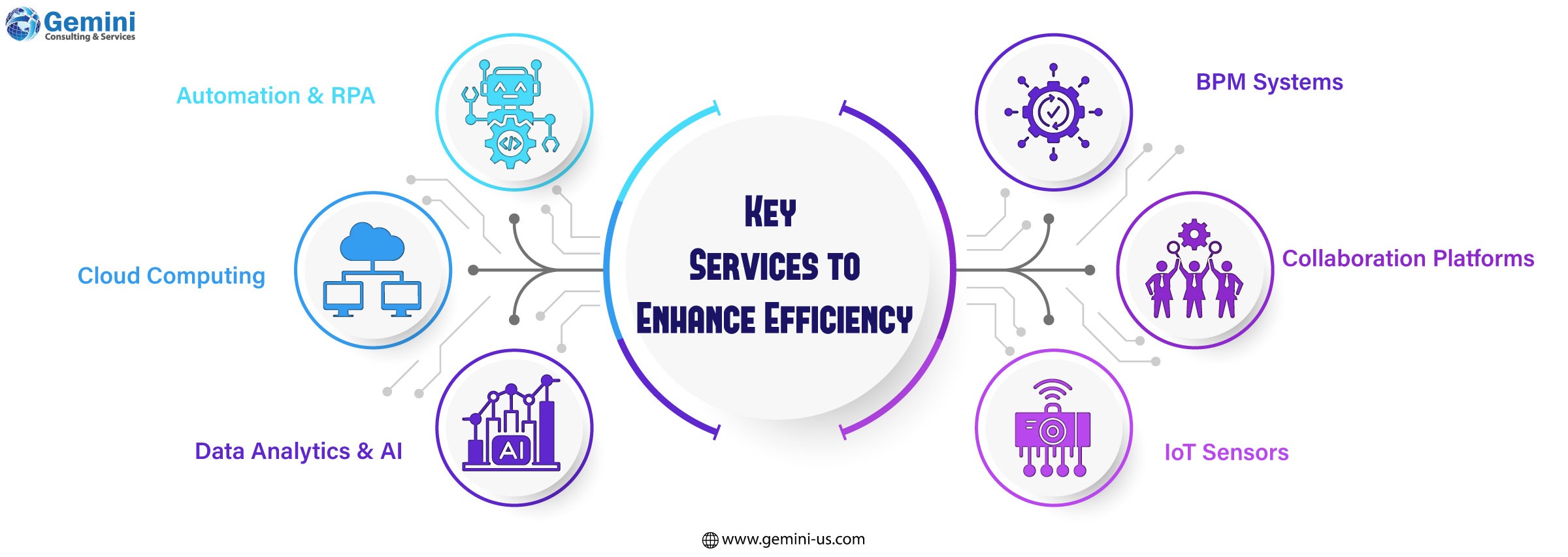
Several digital solutions consistently drive operational improvements:
- Automation & RPA: Software bots take care of routine, rule-based tasks, minimizing mistakes and allowing employees to focus on higher-value work.
- Cloud Computing: Scalable, subscription-based platforms support remote work and collaboration.
- Data Analytics & AI: The latest tools based on Artificial Intelligence offer real-time insights that help companies to predict future market trends accurately and adjust supply chain operations and strategize better.
- Business Process Management (BPM) systems: They are designed to optimize intricate workflows, helping organizations improve efficiency and minimize bottlenecks.
- Collaboration Platforms: Digital communication tools accelerate project execution and reduce travel costs.
- IoT Sensors: Real-time equipment monitoring reduces downtime and improves asset performance.
Together, these technologies enable the shift from paper-based, manual operations to integrated digital ecosystems that enhance productivity and customer satisfaction.
Building Adaptability in a Changing Market
Technologies such as AI and machine learning help companies anticipate trends, personalize offerings, and innovate proactively. Digital transformation is not merely about keeping pace—it is about leading change and building sustainable competitive advantage.
Culture, Innovation, and Change Management
Technology alone does not drive transformation. Organizational culture plays a decisive role. While implementing the right digital transformation strategy is crucial, enterprises must also invest in employee training and skill development.
Encouraging innovation, aligning teams with strategic goals, and supporting continuous learning are essential components of successful transformation. When employees are engaged and empowered, efficiency improvements become embedded in daily operations.
If your organization is seeking digital transformation solutions to enhance efficiency and boost productivity, Gemini Consulting & Services is ready to support you. Get in touch with us to receive a tailored roadmap designed to guide your digital transformation journey.
Asset Management and Operational Performance
For asset-intensive industries, digital transformation also improves enterprise asset management. Implementing robust digital asset management solutions enhances equipment availability, reduces maintenance costs, and optimizes the lifecycle of critical assets.
Real-time monitoring, predictive maintenance, and integrated performance tracking directly impact profitability by minimizing downtime and maximizing productivity.
In digital transformation, domains are essentially aims for transformation. Most digital transformation approaches target below domains:
• Business models: Business model transformation is a fundamental change in the way that an organization delivers products, services and value to its customers.
• Operating models or processes: Business process optimization is a progressively common digital transformation driver such as Creating intelligent workflows by using AI and Replacing manual tasks with AI and automation
• Employee experience: Employee experience is a holistic approach to talent management that helps ensure that employees have the tools which need to prosper or mount for a success.
• Customer experience: Digital transformation journeys lead to the customer experience domain which persistently improving the customer experience is a competitive imperative for most organizations.
Conclusion
Digital transformation is fundamentally about business transformation. It integrates technology across the entire value chain from suppliers to customers while reshaping processes, culture, and strategy.
By embracing automation, cloud computing, data analytics, AI, IoT, and modern collaboration tools, organizations can streamline operations, reduce costs, and strengthen decision-making. More importantly, they can build agile, scalable systems that support sustainable growth.