
Digital transformation is no longer a buzzword. It has become a fundamental driver of growth, resilience, and competitive advantage for businesses worldwide. Across industries, organizations are adopting technologies such as Artificial Intelligence (AI), cloud computing, automation, the Internet of Things (IoT), and data analytics to modernize operations, deliver better customer experiences, and unlock new business models.
What began as a technology upgrade has evolved into a strategic shift that reshapes how companies operate, innovate, and engage with customers. Today, digital transformation is helping industries move faster, work smarter, and stay prepared for the future.
The Role of Digital Transformation in Modern Businesses
At its core, digital transformation is about using technology to improve processes, decision-making, and customer relationships. Businesses are moving away from manual, reactive workflows towards intelligent, data-driven systems that enable agility and scale.
Technologies like AI and Machine Learning (ML) automate repetitive tasks and uncover insights hidden in large data sets. Cloud platforms provide flexible, on-demand infrastructure, while IoT devices deliver real-time visibility into operations. Together, these tools help organizations become more customer-centric, efficient, and innovative.
Research consistently shows that companies adopting digital technologies early outperform their competitors in productivity, profitability, and customer satisfaction. This trend is visible across nearly every industry.
McKinsey reports that the primary goal most organizations mention when pursuing digital transformation is the digitization of their operating models, an aim identified by 68% of survey participants. In contrast, fewer than half of respondents indicated that their focus was on introducing new digital products or services or engaging with external partners via digital platforms.
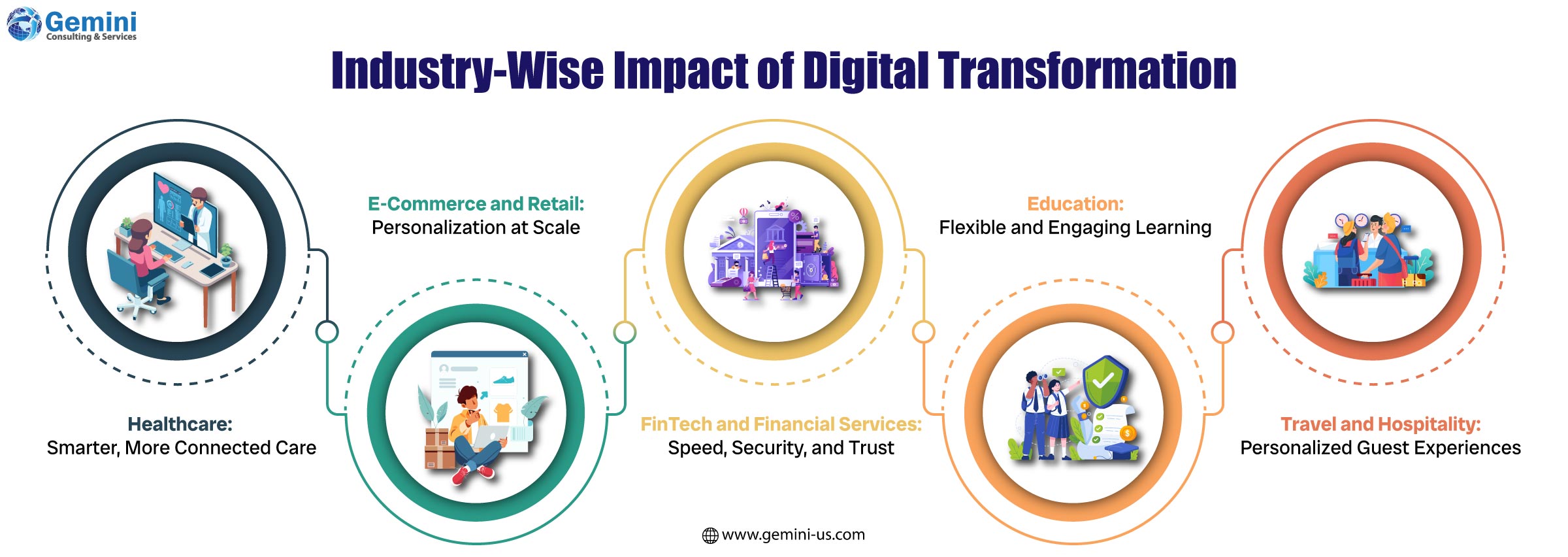
1. Healthcare: Smarter, More Connected Care
Healthcare has experienced one of the most significant digital shifts in recent years. Telemedicine platforms enable remote consultations, expanding access to care for patients in underserved areas. AI-powered diagnostic tools assist clinicians by analyzing medical images and patient data with high accuracy, leading to faster and more informed decisions.
Wearables and IoT devices allow continuous health monitoring, enabling preventive care and early intervention. Modern Electronic Health Record (EHR) systems ensure secure data sharing while complying with global standards. As a result, healthcare providers see improved patient outcomes, reduced errors, and stronger patient trust.
2. E-Commerce and Retail: Personalization at Scale
Digital transformation has redefined how consumers shop online. AI-driven recommendation engines analyze browsing behavior and purchase history to deliver personalized product suggestions, boosting conversion rates and customer loyalty.
Automation streamlines inventory management, order processing, and logistics, reducing costs and delivery times. Augmented Reality (AR) allows customers to virtually try products, increasing purchase confidence and lowering return rates. In a highly competitive market, scalable digital commerce platforms are now essential for growth.
3. FinTech and Financial Services: Speed, Security, and Trust
Financial services are rapidly evolving through digital innovation. Mobile wallets, secure payment gateways, automated KYC processes, and blockchain-based systems are transforming how customers interact with banks and financial institutions.
AI enhances fraud detection, credit scoring, and investment management, while cloud-based platforms enable real-time payments and insights. As consumer expectations shift towards constant availability and mobile-centered experiences, financial institutions that adopt digital transformation achieve greater agility, scalability, and enhanced security.
4. Education: Flexible and Engaging Learning
Education has shifted from traditional classrooms to digital-first learning ecosystems. E-learning platforms provide flexible access to courses anytime, anywhere, making education more inclusive.
Gamification using quizzes, badges, and interactive modules boosts student engagement and learning outcomes. Learning Management Systems (LMS) automate administration, communication, and performance tracking, supporting hybrid and remote learning models. Digital tools are making education more accessible, scalable, and effective.
5. Travel and Hospitality: Personalized Guest Experiences
The travel and hospitality industry is leveraging digital tools to meet rising customer expectations. Smart booking engines, digital check-ins, and automated itinerary planning simplify the travel journey.
By analyzing data, enterprises can provide personalized services to customers. It also helps optimize pricing and improve loyalty programs. IoT-enabled smart rooms enhance guest comfort while reducing operational inefficiencies. Mobile applications deliver instant information and effortless interaction, resulting in smoother and more engaging user experiences.
Key Technologies Driving Digital Transformation
Several core technologies are enabling this industry-wide shift:
- Cloud Computing: Provides scalable infrastructure and supports rapid deployment of new services.
- AI & Machine Learning: Businesses can use these technologies to optimize processes, provide personalized experiences, forecast industry trends, and detect fraud.
- Big Data & Analytics: These technologies analyze raw information to generate meaningful insights, supporting more informed decisions.
- IoT: Connects devices to enable real-time monitoring and predictive maintenance.
- Automation & Robotics: Organizations can implement these technologies to streamline tasks, enhance precision, and lower operational costs.
- Cybersecurity: Protects sensitive data and builds trust in digital ecosystems.
- Digital Twins: Allows businesses to simulate and optimize processes before real-world implementation.
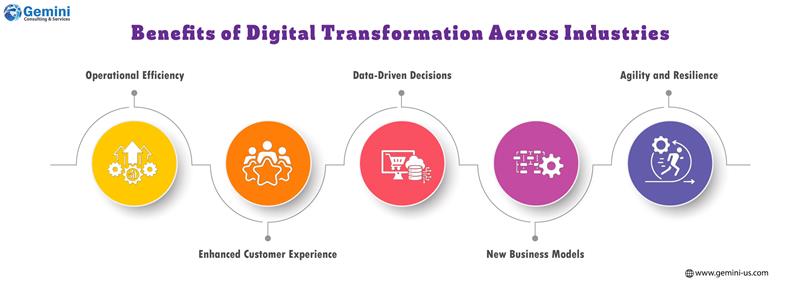
When implemented strategically, digital transformation delivers measurable value:
- Operational Efficiency: Streamlined workflows and lower costs
- Enhanced Customer Experience: Personalization, speed, and seamless journeys
- Data-Driven Decisions: Real-time insights for proactive strategies
- New Business Models: Platform-based services and ecosystem partnerships
- Agility and Resilience: Faster adaptation to market changes and disruptions
Industries such as IT, media, finance, and professional services are already highly digitized, while sectors like healthcare, hospitality, agriculture, and construction still have significant untapped potential.
Gemini Consulting & Services partners with organizations worldwide to drive digital transformation. With over 10 years of experience, we deliver tailored software solutions by integrating AI, cloud computing, automation, and modern development techniques to build scalable and future-ready digital platforms. Contact us to learn how our team works closely with businesses to understand their workflows, customer needs, and operational challenges.
Final Thoughts
Digital transformation is rapidly redefining industries worldwide. As competition intensifies and customer expectations evolve, embracing digital technologies is no longer optional but essential. Organizations that invest in the right tools, strategies, and partners can unlock efficiency, innovation, and long-term growth.
With the right approach, digital transformation doesn’t just modernize businesses, it prepares them to lead in a digital-first world.