
Many digital transformation initiatives begin with big aspirations, such as modern systems, smarter processes and better customer experiences. Yet, just as often, they lose momentum. Teams chase disconnected projects, budgets are stretched thin, and results fall short of expectations. The root cause is rarely the technology itself. More often, it’s the absence of a clear, well-structured digital transformation roadmap.
A digital transformation roadmap turns ambition into action. It provides direction, aligns technology investments with business priorities, and helps organizations move from isolated digital efforts to measurable, long-term impact. In this blog, we will break down what a digital transformation roadmap is, why it matters, and how to build one that actually works.
What Is a Digital Transformation Roadmap?
A digital transformation roadmap is a structured plan that connects business goals with technology initiatives over time. It outlines where the organization is today, where it wants to go, and how it will get there, across people, processes, data, and technology.
Without a roadmap, digital transformation becomes reactive and fragmented. Projects compete for resources, teams work in silos, and progress is difficult to measure. A well-defined roadmap brings order to this complexity by sequencing initiatives, clarifying ownership, and setting clear success metrics.
Core Elements of an Effective Roadmap
While every organization’s roadmap will look different, strong roadmaps typically include the following components:
- Timeline and Phases: Clear stages with milestones that show how transformation unfolds over months or years.
- Business Objectives: Specific outcomes tied to growth, efficiency, customer experience, or innovation.
- Initiatives and Programs: Concrete projects such as cloud migration, analytics platforms, automation, or CX improvements.
- Guiding Principles: Shared standards and values like scalability, security, and user-centricity that keep initiatives aligned.
Together, these elements ensure that digital efforts are intentional, coordinated, and results-driven.
Why a Digital Transformation Roadmap Matters
A roadmap is more than a planning artifact. It’s a strategic tool that helps organizations avoid common transformation pitfalls.
With a clear roadmap, businesses can:
- Focus on high-impact initiatives instead of chasing every new technology trend
- Allocate budgets, skills, and tools more effectively
- Reduce risk by anticipating dependencies and constraints early
- Improve adoption by aligning people, processes, and systems
- Track progress using clear KPIs and performance benchmarks
Most importantly, a roadmap creates alignment. Everyone from executives to frontline teams understands priorities, responsibilities, and what success looks like.
Strategy vs. Roadmap: Understanding the Difference
One common reason transformations stall is confusion between strategy and execution.
- Digital transformation strategy defines the why and what: the vision, long-term goals, and competitive positioning.
- Digital transformation roadmap defines the how and when: the sequence of initiatives, timelines, and measurable outcomes.
A strategy without a roadmap lacks execution discipline. A roadmap without a strategy lacks direction. Successful organizations treat them as complementary, strategy sets the destination, and the roadmap charts the path.
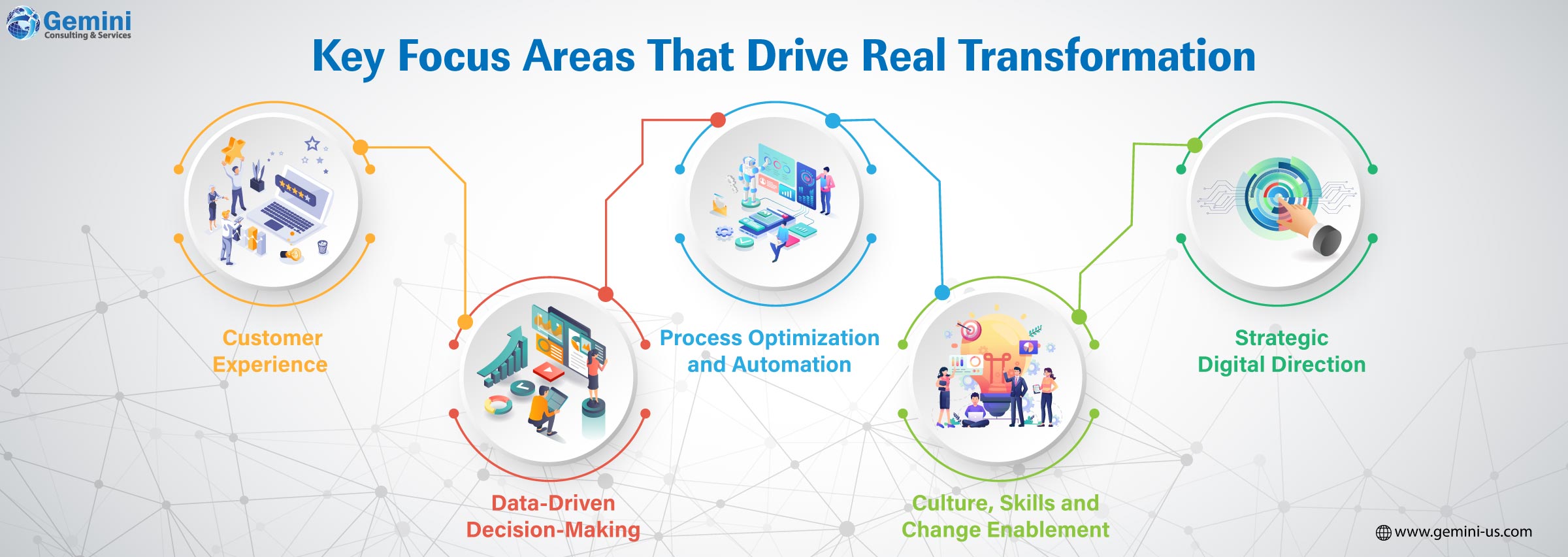
Digital transformation is about aligning technology with the areas that matter most to the business. Effective roadmaps typically emphasize five focus areas. Gemini Consulting & Services supports organizations worldwide in advancing their digital transformation efforts. Contact us to discover how our technology specialists can design a personalized roadmap to successfully digitize and future-proof your business.
1. Customer Experience (CX)
Improving customer experience is often the most visible and valuable outcome of digital transformation. Roadmaps should prioritize initiatives such as personalized digital journeys, omnichannel engagement, self-service capabilities, and predictive customer insights. Over time, these efforts evolve from basic digital touchpoints to fully integrated, data-driven experiences.
2. Data-Driven Decision-Making
Data is the backbone of modern organizations. A strong roadmap includes plans to centralize data, improve data quality, and apply analytics or AI to support forecasting and decision-making. As maturity increases, insights move from descriptive reporting to predictive and automated intelligence.
3. Process Optimization and Automation
Transformation also means working smarter internally. Automating repetitive tasks, integrating core systems, and streamlining workflows can unlock significant productivity gains. Early wins often come from back-office automation, followed by more advanced, intelligent process optimization.
4. Culture, Skills, and Change Enablement
Technology alone does not transform organizations, but people do. Roadmaps must account for training, digital literacy, leadership alignment, and new ways of working. Agile methods, continuous learning, and feedback mechanisms help embed digital thinking into everyday operations.
5. Strategic Digital Direction
Finally, every initiative should reinforce long-term business strategy. This includes evaluating emerging technologies, scaling successful pilots, and remaining flexible as markets evolve. A roadmap should provide direction without locking the organization into rigid plans.
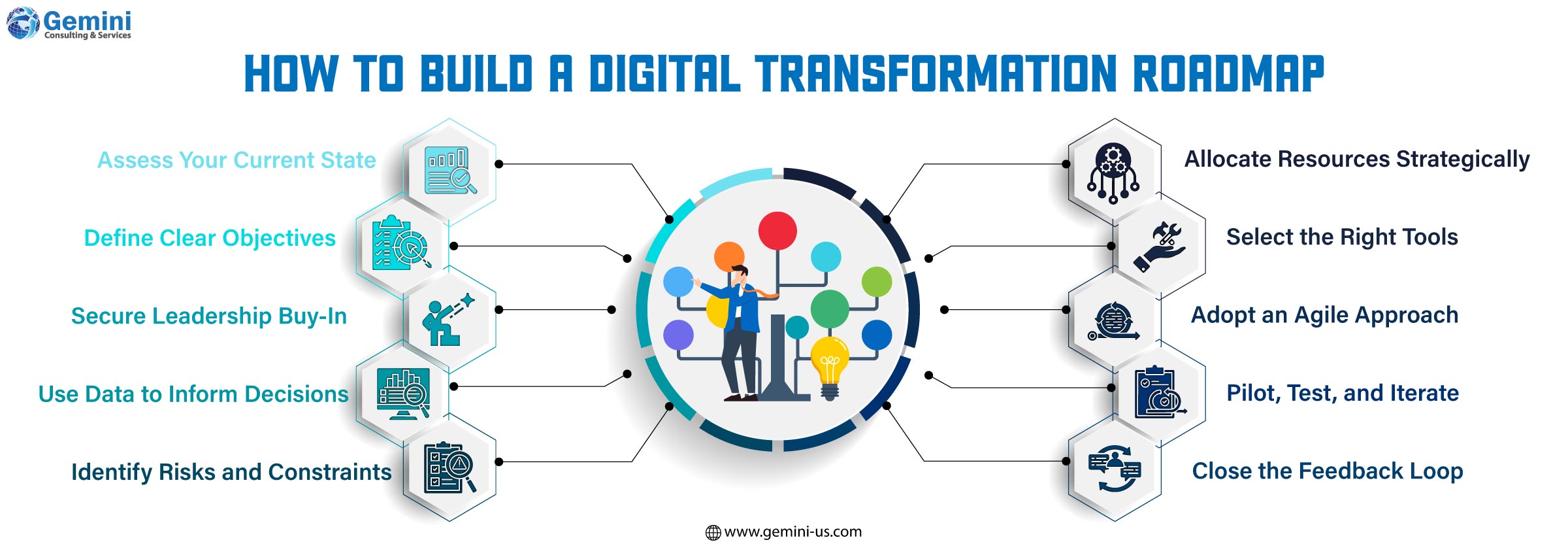
Step 1: Assess Your Current State
Begin by understanding where you stand today. Review existing technologies, processes, skills, and performance metrics. Identify inefficiencies, bottlenecks, and gaps. Tools like digital maturity assessments or SWOT analyses can help establish a realistic baseline.
Step 2: Define Clear Objectives
Transformation must be anchored in business outcomes, such as improving customer satisfaction, increasing efficiency, or enabling growth. Define objectives using clear, measurable criteria so progress can be tracked over time.
Step 3: Secure Leadership Buy-In
Executive sponsorship is critical. Leaders must understand how digital initiatives support strategic goals and deliver ROI. Early engagement ensures funding, prioritization, and organizational support.
Step 4: Use Data to Inform Decisions
Leverage customer insights, operational metrics, employee feedback, and market intelligence to guide priorities. Data-driven planning reduces assumptions and strengthens the case for change.
Step 5: Identify Risks and Constraints
Anticipate challenges such as legacy system limitations, security concerns, regulatory requirements, or resistance to change. Proactive risk planning helps avoid costly delays later.
Step 6: Allocate Resources Strategically
Determine budgets, staffing needs, and skill gaps. Decide where to upskill existing teams and where external expertise may be required. Cross-functional coordination is essential at this stage.
Step 7: Select the Right Tools
Technology should support your roadmap, not define it. Choose tools that integrate well with your existing ecosystem, scale over time, and are easy for users to adopt.
Step 8: Adopt an Agile Approach
Digital transformation is not a one-time program. Break initiatives into smaller phases, deliver value incrementally, and adapt based on feedback. Agile ways of working increase speed and reduce risk.
Step 9: Pilot, Test, and Iterate
Start with small, high-impact pilots to validate assumptions. Gather feedback, measure performance, and refine solutions before scaling across the organization.
Step 10: Close the Feedback Loop
Sustainable transformation depends on continuous improvement. Use dashboards, KPIs, and user feedback to monitor progress. Adjust the roadmap as business priorities and technologies evolve.
A culture of innovation
One of the major footraces in digital transformation is ensuring effective association across different sectors / departments and teams. Without this association, digital initiatives can weaken.
Challenges To Avoid In Your Digital Transformation Roadmap
- Lack of cooperation
- Lack of observing
- Lack of risk management
- Lack of the right tool
Bringing It All Together
Starting a digital transformation roadmap doesn’t require perfection, it requires clarity, alignment, and momentum. By assessing your current state, defining business-aligned goals, securing leadership support, and focusing on people as much as technology, you create a foundation for lasting change.
A well-executed roadmap turns digital transformation from a series of disconnected projects into a cohesive journey, one that delivers real value, builds resilience, and positions your organization for the future.