
When it comes to ERP project success, three parties are always involved: the vendor, the implementation partner, and the customer organization. That’s not new. What’s often overlooked, however, is that real success depends less on individual roles and more on how effectively the implementation partner and the client collaborate.
This relationship is where projects are won or lost.
The Implementation Partner: Stuck in the Middle
Implementation partners operate in a challenging space. They face pressure from vendors to deliver quickly and keep the pipeline moving, while customers expect high value, flexibility, and smooth change management.
But here’s the reality. No matter how strong the product or vendor is, poor collaboration between the client and partner will derail the project.
ERP implementations are not just technical deployments, they are organizational transformations. And transformation cannot be outsourced.
Why Collaboration Breaks Down
Many implementation partners are deeply product-focused. They know the system inside out. But ERP success isn’t just about configuring features, it’s about aligning people, processes, and expectations.
At the same time, customers often underestimate their own role. They may:
- Assign the wrong stakeholders
- Lack a strong internal sponsor
- Shift priorities mid-project
- Expect the partner to “handle everything”
This creates a dangerous imbalance where the partner is expected to compensate for gaps on the client side. That’s not sustainable and rarely successful.
The Real Problem: Misalignment from Day One
A major issue lies in the disconnect between sales and delivery within the partner organization and between expectations and reality on the client side.
Deals are often closed based on optimistic assumptions:
- Scope is loosely defined
- Responsibilities are not clearly agreed
- Readiness of the customer is not validated
By the time delivery teams engage, expectations are already set. At that point, even strong collaboration becomes difficult because the foundation is flawed.
If your enterprise is looking for an ideal technological partner to implement ERP system, Gemini Consulting & Services can help you. Contact us to get a customized blueprint on ERP implementation and tangible outcomes.
Shared Responsibility = Shared Success
ERP success should never be owned by just one party. It must be co-owned.
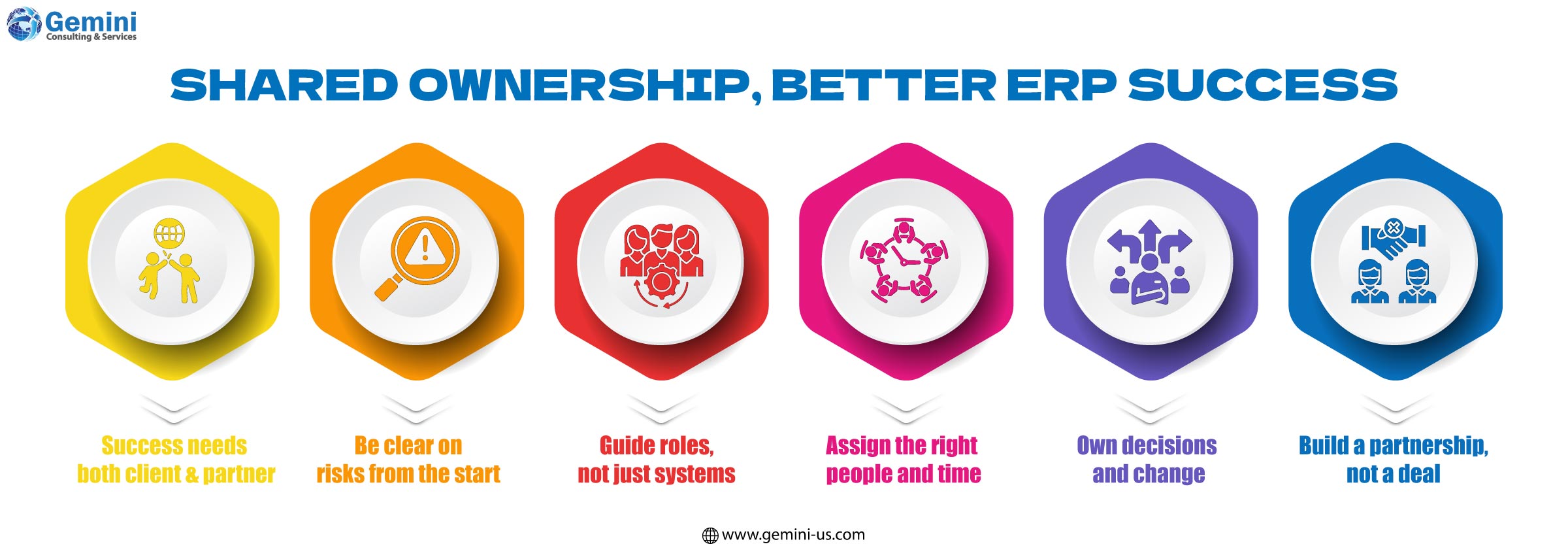
Implementation partners need to:
- Be honest during pre-sales about risks and readiness
- Push back when conditions for success are not met
- Guide clients on their responsibilities, not just system usage
Customers, on the other hand, must:
- Commit the right people and time
- Take ownership of decisions and change management
- Respect agreed roles and responsibilities
When both sides actively engage, the project becomes a partnership, not a transaction.
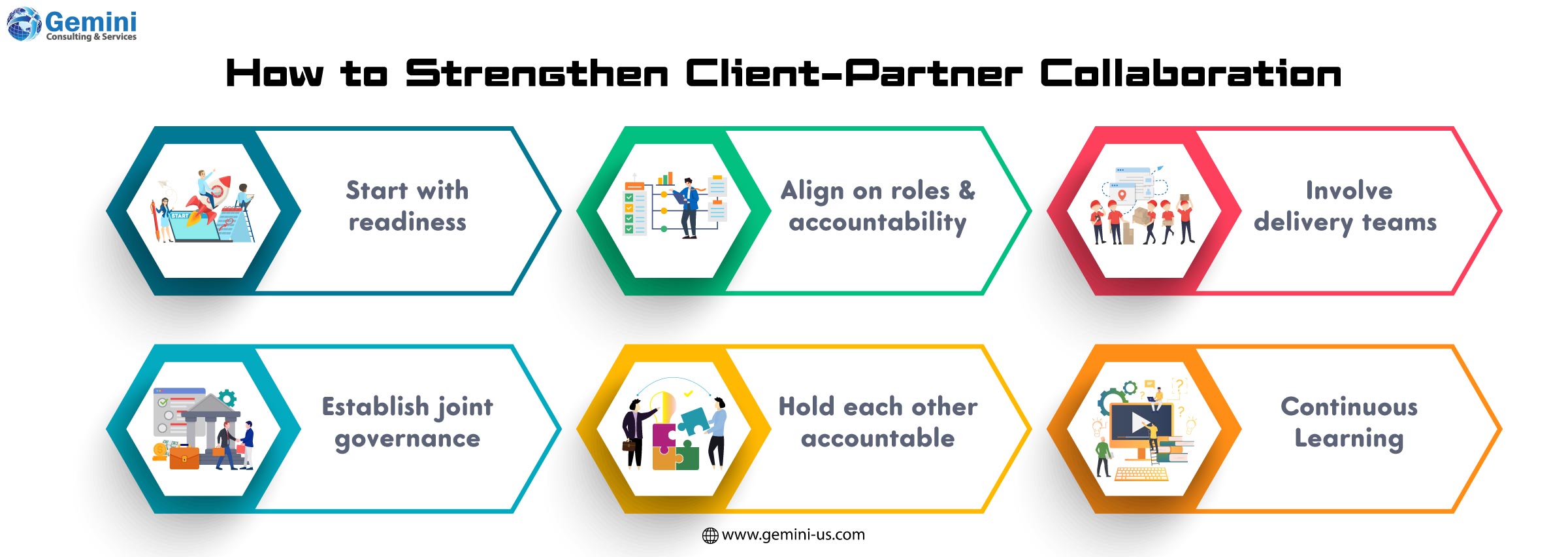
To improve ERP outcomes, both sides need to invest in how they work together:
1. Start with readiness, not just requirements
Before signing, validate whether the client is truly prepared, organizationally and operationally, for an ERP implementation.
2. Align on roles and accountability early
Define who does what, in detail. Avoid vague ownership. Collaboration thrives on clarity.
3. Involve delivery teams before closing the deal
This bridges the gap between sales promises and execution reality.
4. Establish joint governance
Create shared steering committees and escalation paths. Decisions should not be one-sided.
5. Hold each other accountable
Partners must enforce agreements, and clients must honor commitments. Flexibility is important, but discipline is essential.
6. Learn together, continuously
Post-project evaluations should include both partner and client teams. Improvement is a shared journey.
From Product Focus to Project Success
Implementation partners often pride themselves on product expertise. That’s important, but insufficient.
True differentiation comes from the ability to drive successful outcomes through collaboration. That means:
- Preparing clients, not just systems
- Challenging assumptions, not just executing tasks
- Building partnerships, not just delivering projects
Final Thought
ERP projects don’t fail because of technology, they fail because of misalignment between people and expectations.
The implementation partner and the client must act as one team, with shared goals, clear responsibilities, and mutual accountability.
Because in the end, ERP success is not delivered, it’s co-created.