
Governments today are under increasing pressure to deliver better services, improve transparency, and meet the growing expectations of citizens. People now expect the same level of digital convenience from public institutions that they receive from private organizations. At the same time, government agencies must maintain accountability, optimize resources, and comply with evolving regulations.
To address these challenges, many public sector organizations are turning to Enterprise Resource Planning (ERP) systems as a foundation for digital transformation. By integrating critical functions and centralizing data, ERP solutions help governments improve efficiency, strengthen governance, and enhance citizen trust.
Why Governments Need Modern ERP Systems
Government agencies manage a wide range of activities, including finance, procurement, human resources, budgeting, project management, and citizen services. In many organizations, these functions operate in separate systems, creating data silos, duplication of effort, and limited visibility into operations.
An ERP system brings these functions together on a single platform, enabling departments to share information seamlessly and work more collaboratively. This integrated approach provides decision-makers with accurate, real-time insights while reducing administrative complexity.
As governments continue to expand digital services, modern technology platforms have become essential for delivering efficient, responsive, and citizen-focused governance.
Market forecasts from Mordor Intelligence, indicate that the Government ERP sector is poised for significant expansion, with revenues projected to increase from $5.17 billion in 2025 to $5.68 billion in 2026 and reach approximately $10.13 billion by 2031. This growth represents an estimated compound annual growth rate (CAGR) of 12.24% between 2026 and 2031.
This growth is primarily fueled by government organizations replacing disconnected legacy applications with integrated ERP solutions that offer a centralized view of key operations, including financial management, human resources, procurement, grants administration, and other essential functions.
How ERP Improves Transparency and Accountability
Transparency is one of the most important pillars of effective public administration. Citizens, oversight bodies, and stakeholders expect government organizations to manage public resources responsibly and provide clear visibility into decision-making processes.
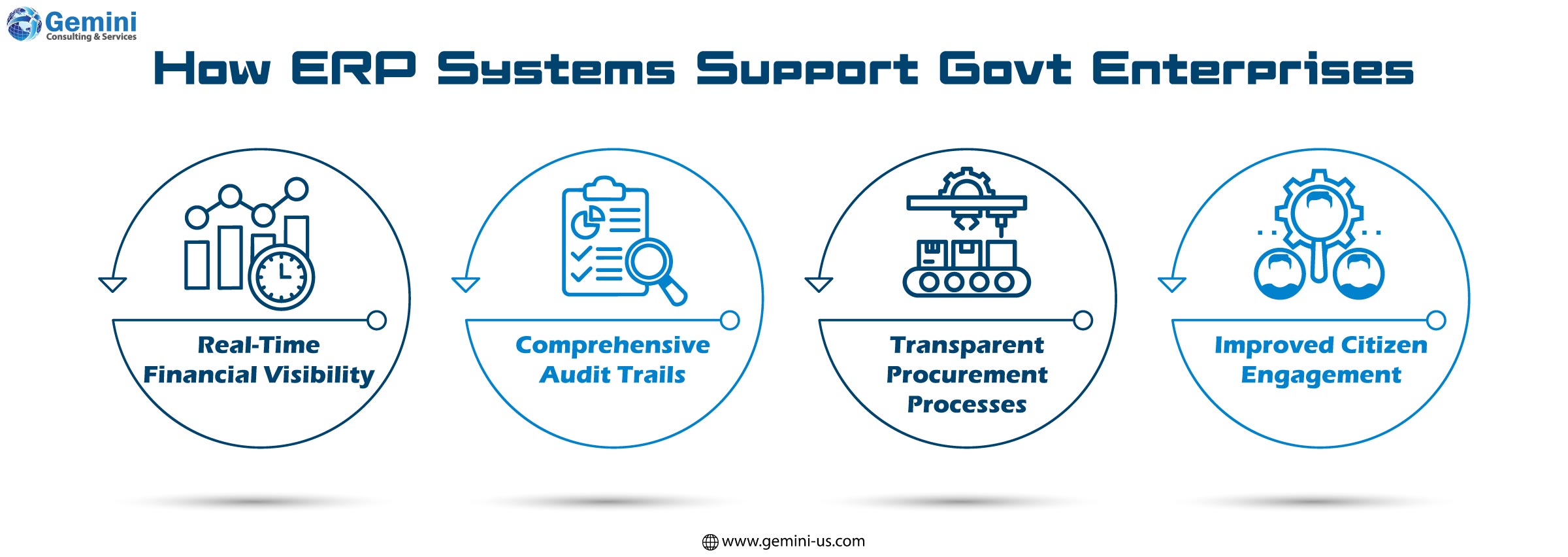
Real-Time Financial Visibility
Contemporary ERP systems combine financial management, budgeting, and accounting processes within a single integrated platform. This allows leaders and auditors to monitor expenditures, revenues, and budget performance in real time, reducing reliance on fragmented spreadsheets and manual reporting.
Comprehensive Audit Trails
Every transaction, update, and approval can be automatically recorded within the ERP system. These audit trails create a reliable history of actions, making it easier to conduct audits, ensure compliance, and strengthen accountability.
Transparent Procurement Processes
Public procurement often involves multiple stakeholders and complex approval workflows. ERP systems digitize the entire procurement lifecycle—from vendor selection to contract execution—helping reduce errors, improve oversight, and promote fair, transparent spending practices.
Improved Citizen Engagement
When connected to citizen-facing portals, ERP platforms enable agencies to provide timely access to information, track service requests, and improve communication with the public. This enhances trust and creates a more responsive government experience.
Benefits Beyond Automation
While automation is a significant advantage, ERP delivers far more than operational efficiency.
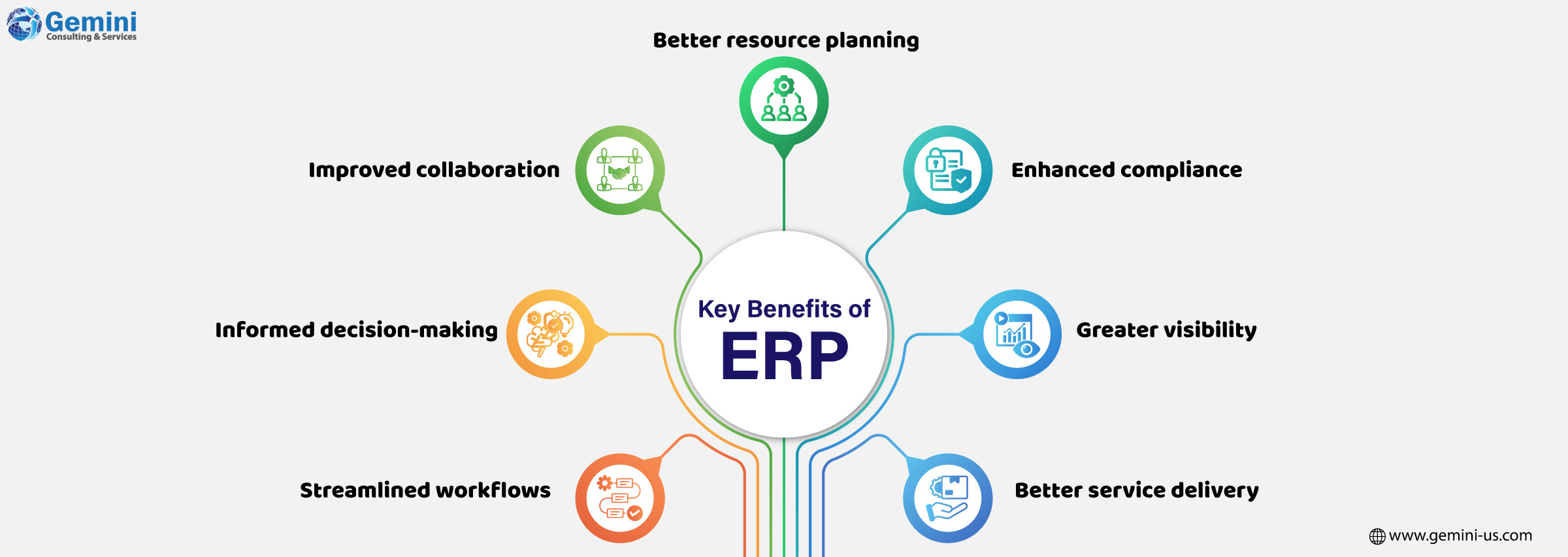
- Streamlined workflows and reduced manual effort
- Faster and more informed decision-making
- Improved collaboration across departments
- Better resource planning and allocation
- Enhanced compliance and risk management
- Greater visibility into organizational performance
- Improved service delivery to citizens
By centralizing data and standardizing processes, ERP systems help government organizations focus less on administrative tasks and more on achieving their public service objectives.
The Importance of Tailored ERP Solutions
No two government organizations operate in exactly the same way. Different departments, agencies, and local authorities have unique processes, reporting requirements, and regulatory obligations.
This is why a one-size-fits-all approach is often insufficient.
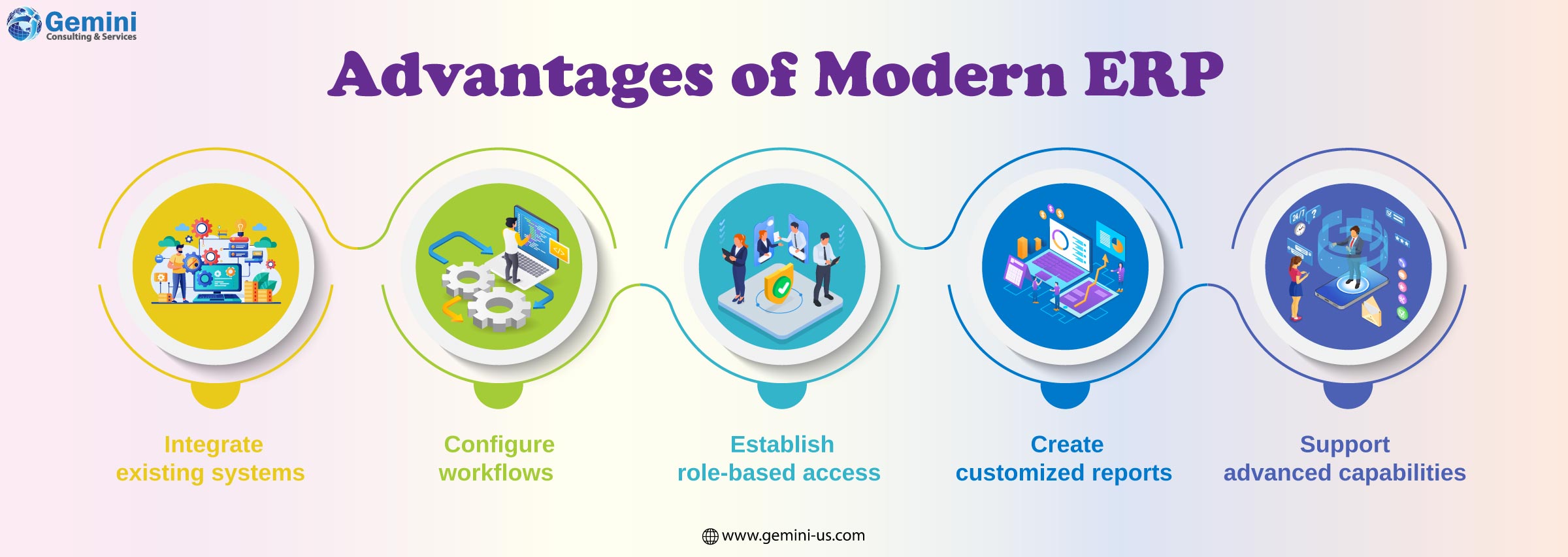
- Integrate existing systems and databases
- Configure workflows based on departmental requirements
- Establish role-based access controls and security policies
- Create customized reports and performance dashboards
- Support advanced capabilities such as predictive analytics and artificial intelligence
A tailored ERP solution ensures that technology aligns with operational realities while supporting long-term strategic goals.
Gemini Consulting & Services enables public sector organizations to evolve their existing technology landscape into an agile and scalable enterprise platform. Partner with us to improve operational efficiency, increase accountability, respond effectively to rising citizen expectations, optimize costs, and achieve impactful, organization-wide digital transformation.
Moving Beyond Legacy Systems
Many public sector organizations continue to rely on legacy systems that were implemented years ago. While these systems may still support core functions, they often struggle to adapt to changing regulations, new service models, and evolving citizen expectations.
As a result, employees frequently resort to spreadsheets, disconnected applications, and manual workarounds to complete critical tasks. These practices increase inefficiencies and limit organizational visibility.
Before replacing existing systems, organizations should assess how their ERP environment is currently being used. An ERP assessment can help identify:
- Processes operating effectively
- Areas where employees work outside the system
- Integration gaps between departments
- Opportunities for automation and modernization
The goal is not always a complete replacement. In many cases, targeted improvements can deliver significant benefits while preserving stable and effective core capabilities.
The Rise of Composable ERP
A growing number of public sector organizations are adopting a composable ERP approach. Instead of relying on a single monolithic system, composable ERP uses modular components that can be integrated as needed.
This approach offers several advantages:
- Greater flexibility to adapt to changing requirements
- Faster implementation of new capabilities
- Easier integration with cloud applications and emerging technologies
- Reduced disruption during modernization initiatives
For example, agencies can upgrade procurement, permitting, billing, or financial management functions independently while maintaining connectivity across the broader technology ecosystem.
This allows governments to modernize strategically rather than undertaking large-scale system replacements that can be costly and disruptive.
Building a Roadmap for Digital Transformation
Effective ERP modernization starts with a well-structured strategic plan. To achieve successful outcomes, public sector organizations should:
- Determine the core business functions that are essential for delivering services, maintaining compliance, and promoting transparency.
- Assess existing process inefficiencies, system limitations, and integration issues across departments.
- Rank modernization efforts according to their potential public benefit, operational improvements, and risk mitigation value.
- Establish governance frameworks that promote robust data protection, seamless system integration, and compliance with applicable regulations.
- Implement adaptable and scalable technology solutions that can support evolving organizational requirements and future innovation initiatives.
By following a clearly defined roadmap, agencies can make strategic technology decisions, optimize investment returns, and reduce disruptions to ongoing operations throughout the transformation process.
Conclusion
ERP systems have become a critical enabler of modern government. By integrating data, automating processes, and improving visibility across departments, they help public sector organizations operate more efficiently, transparently, and accountably.
As governments continue their digital transformation journeys, ERP platforms provide the foundation needed to meet rising citizen expectations, strengthen fiscal management, and improve service delivery. Whether through a fully integrated platform or a more flexible composable approach, investing in the right ERP strategy can help public sector organizations build a more connected, transparent, and future-ready government.