
Digital payments are no longer simply a way to move money from one bank account to another. For modern enterprises, payments have become a strategic component of customer experience, financial operations, procurement, treasury, and global commerce.
Traditional payment processes often depend on multiple banks, payment service providers (PSPs), clearing systems, manual reconciliations, and country-specific regulations. While digital transformation has significantly improved the automation surrounding payments, the underlying movement of money has historically remained tied to conventional banking infrastructure.
This is now changing. Technologies such as real-time payments, cloud integration, Artificial Intelligence (AI), tokenization, stablecoins, and blockchain are creating new possibilities for how businesses initiate, process, secure, and reconcile payments. SAP is positioning its payment portfolio to support this transformation by connecting payment capabilities more closely with core enterprise processes.
MarketsandMarkets estimates that the worldwide digital payments market, valued at around $111.2 billion in 2023, could exceed $193.7 billion by 2028, representing a CAGR of 11.8% over the forecast period.
From Traditional Payments to Intelligent Digital Payments
Enterprise payment processing has traditionally focused on automating repetitive activities such as vendor payments, bank communication, reconciliation, and accounting. However, global businesses now require more than automation.
They need payments that are faster, more secure, easier to integrate, and capable of supporting different payment methods across markets. They also require greater insight into cash flow patterns and the flexibility to adapt swiftly to evolving customer needs.
SAP Digital Payments addresses this need through a cloud-based integration approach on SAP Business Technology Platform (BTP). It connects enterprise applications with payment service providers and enables capabilities such as card registration, payment authorization, refunds, settlement, and payment advice.
By separating PSP integrations from the ERP core, businesses can add or change payment providers with less disruption. This supports the clean-core principle, reducing the need for custom code inside SAP S/4HANA and making future upgrades easier.
Connecting Payments with Core Business Processes
One of the most important developments in enterprise payments is the integration of payment execution with everyday business processes.
In the Order-to-Cash (O2C) cycle, payment authorization can be connected with sales orders, billing, accounts receivable, and reconciliation. Instead of treating payment as a separate activity, organizations can build a continuous digital process from order creation to settlement.
The same principle applies to Source-to-Pay (S2P). Procurement activities, purchase orders, goods receipts, invoice processing, approvals, and supplier payments can be connected into a unified workflow.
This integration can reduce manual intervention, accelerate payment cycles, improve reconciliation, and provide greater visibility into financial transactions.
The Rise of Real-Time Payments
Real-time payment systems are playing an increasingly significant role in the global financial landscape, as businesses and individuals expect transactions to be completed instantly without being restricted by conventional banking hours.
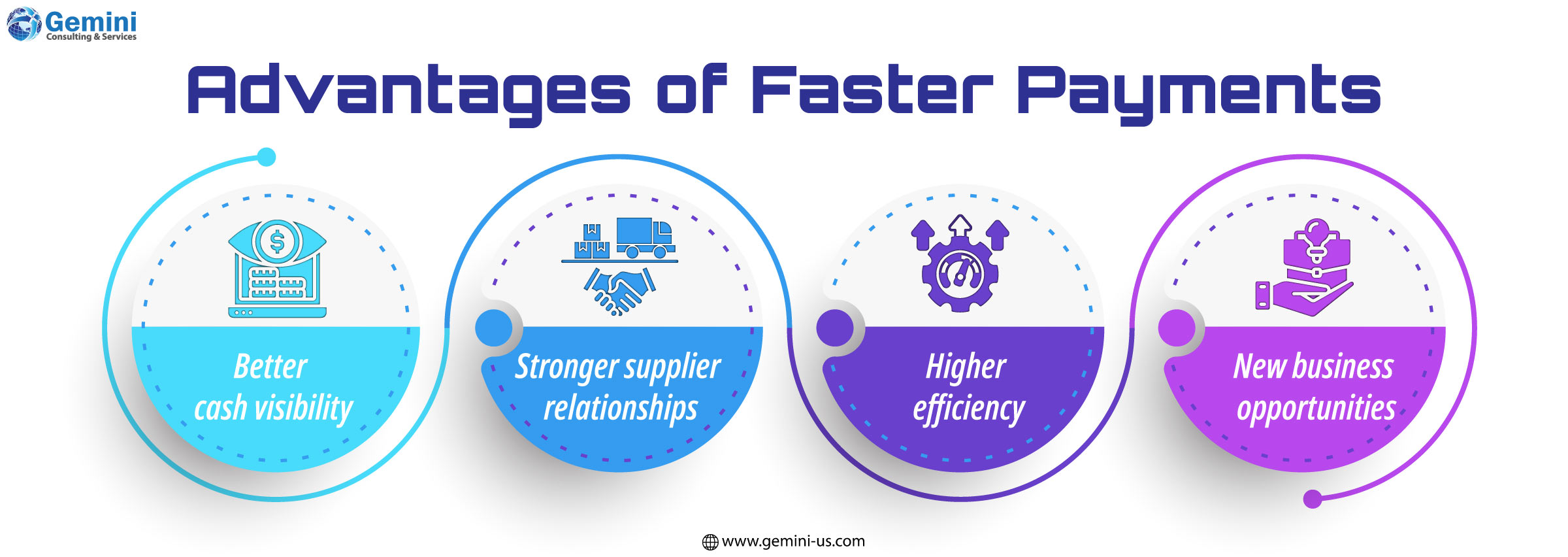
- Improved cash-flow visibility: Immediate payment confirmations provide more timely information about cash positions.
- Better supplier relationships: Faster settlement can improve supplier satisfaction and potentially support stronger commercial relationships.
- Greater operational efficiency: Automated payment confirmation and reconciliation can reduce manual processing.
- New business models: Instant payments can support services that depend on immediate settlement.
SAP environments are evolving to connect with different payment networks and schemes, helping enterprises integrate faster payment capabilities into their financial processes.
AI: Making Payment Operations More Intelligent
Automation alone will not define the future of payment systems; the real advancement lies in integrating intelligent technologies. Artificial intelligence (AI) and machine learning enable organizations to process extensive financial and transaction data, recognize trends, forecast potential outcomes, and make automated decisions more efficiently.
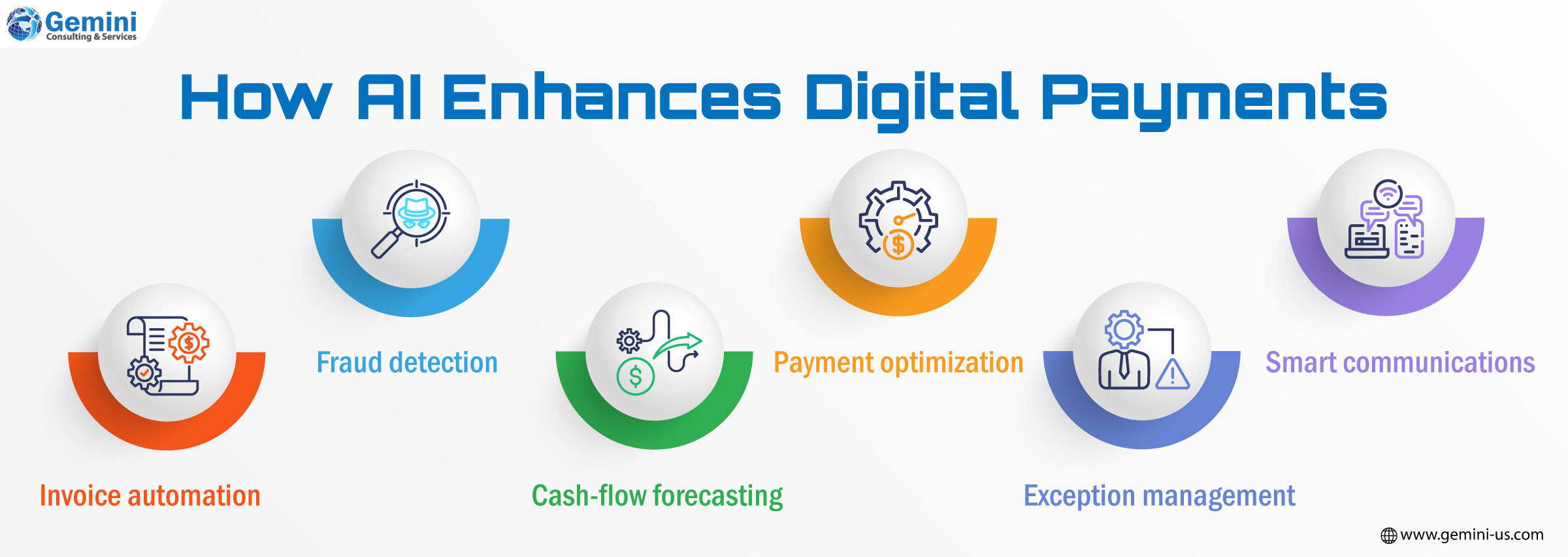
- Automated invoice data extraction and matching
- Fraud and anomaly detection
- Cash-flow forecasting
- Payment-method recommendations
- Exception management
- Automated financial communications
AI can also help organizations move from reactive payment management to proactive financial operations. Instead of simply identifying an issue after a transaction has occurred, intelligent systems can detect unusual behavior and potential risks before payment execution.
The emergence of AI agents and intelligent assistants within enterprise environments could further automate routine financial activities while maintaining appropriate approval and compliance controls.
SAP Digital Currency Hub and the Evolution of Money
While conventional digital payment solutions enhance the processing of existing currencies, emerging technologies are beginning to transform the fundamental infrastructure through which payments are transferred.
SAP Digital Currency Hub has been launched as an early-access solution to support transactions involving stablecoins. These blockchain-based digital assets are generally structured to preserve a consistent value by linking their worth to a reference currency, such as the US dollar.
This approach has the potential to enable payments that operate continuously, including outside traditional banking hours. For international transactions, blockchain-based payment rails may also offer an alternative to conventional correspondent banking structures.
The broader significance is that enterprise payment infrastructure may eventually support multiple forms of digital money alongside traditional bank-based payments.
However, organizations must evaluate regulatory requirements, liquidity considerations, blockchain infrastructure, and the specific use cases before adopting these technologies at scale.
Security and Compliance at the Core
As payment processes become increasingly digital, security becomes even more important.
Payment card information is particularly sensitive. Exposing or unnecessarily storing card details can increase security risks and compliance obligations.
SAP Digital Payments uses cloud-based processing and tokenization approaches to reduce the need for enterprises to directly store sensitive card information. This can help strengthen security and simplify compliance activities associated with payment card processing.
Compliance remains a broader challenge for multinational organizations. Businesses must navigate requirements related to data privacy, anti-money laundering, payment regulations, authentication, fraud prevention, and evolving standards such as ISO 20022.
An effective modern payment system should combine automation with clear governance policies, ongoing oversight, robust security safeguards, and transparent, traceable records of all transactions.
Cloud and Clean Core: Building a Flexible Payment Architecture
Cloud adoption is another major factor shaping enterprise payments.
Cloud-based payment services can provide scalability, easier access to new capabilities, and reduced infrastructure management. More importantly, they can allow organizations to separate payment functionality from the ERP core.
This is where the clean-core approach becomes particularly valuable.
By decoupling Payment Service Provider (PSP) integrations from SAP S/4HANA, companies can potentially support multiple payment providers and change providers through configuration rather than extensive custom development. This reduces technical debt and can make upgrades and future innovation easier.
SAP BTP can serve as an integration and orchestration layer between enterprise applications, payment providers, banks, and other digital services.
If your organization aims to simplify and optimize its digital payment operations, Gemini Consulting & Services can provide the expertise and support needed to achieve these goals. Contact us to learn how SAP Digital Payments hub can be customized so that your business need not worry about missed payments or compliance issues.
Challenges on the Road Ahead
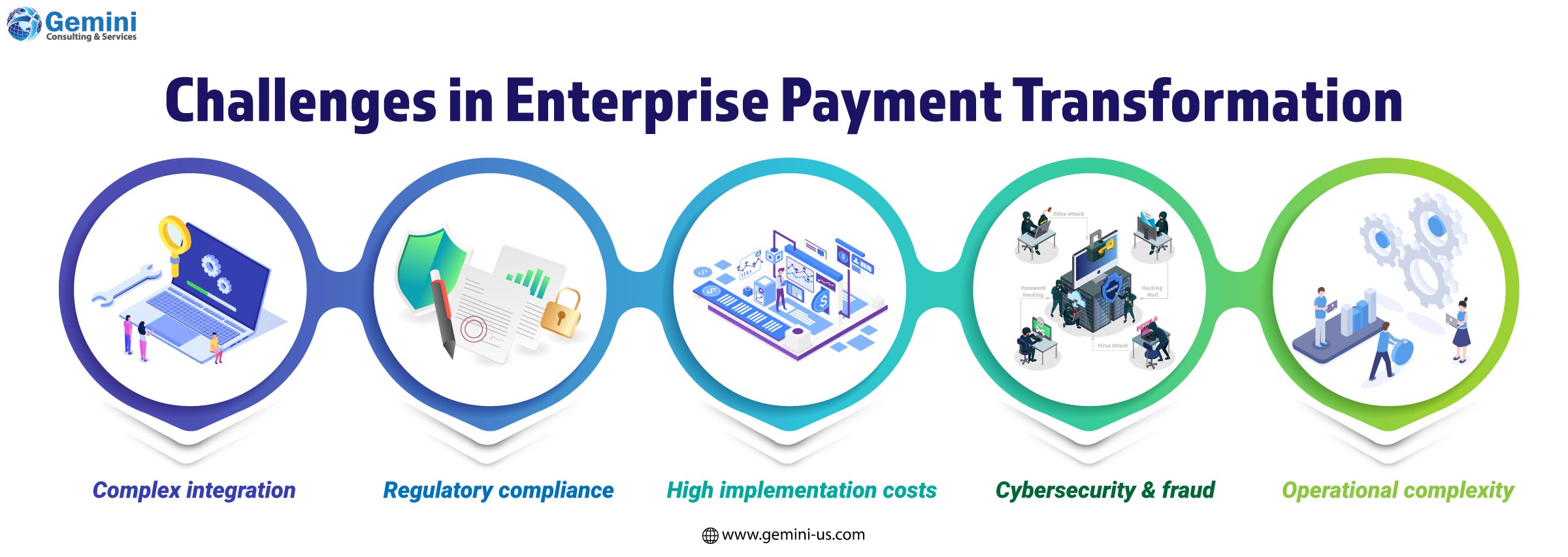
The transformation of enterprise payments is not without challenges.
Global organizations must manage multiple banks, currencies, payment methods, regulations, legacy systems, and integration standards. Connecting these environments can require sophisticated data mapping, APIs, middleware, and security controls.
Implementation costs also need careful consideration. Organizations should evaluate software, integration, consulting, migration, training, maintenance, and compliance costs against measurable business benefits.
Cybersecurity and fraud remain equally important. Strong authentication, segregation of duties, transaction monitoring, approval workflows, and employee awareness are essential components of a modern payment strategy.
A New Era for SAP Payments
Enterprise payments are moving from being a back-office transaction function to becoming an integrated component of digital business.
SAP's payment capabilities reflect this evolution by bringing together cloud integration, real-time payments, AI-driven automation, secure card processing, payment orchestration, and emerging digital-currency capabilities.
The long-term opportunity is not simply to process payments faster. It is to create an intelligent payment ecosystem in which commerce, procurement, finance, treasury, and payment execution operate as connected processes.
As businesses continue to demand faster transactions, flexible payment options, stronger security, and greater financial visibility, the organizations that modernize their payment architecture will be better positioned to compete in an increasingly digital global economy.
The future of SAP payments is therefore not just about moving money. It is about making money movement an intelligent, integrated, secure, and strategic part of the enterprise.