
In today's digital enterprise, data is one of the most valuable business assets. For organizations running SAP landscapes, whether SAP ECC, SAP S/4HANA, or hybrid environments, effective data governance is essential for maintaining data accuracy, improving security, ensuring compliance, and enabling confident decision-making.
Without a structured governance strategy, organizations often struggle with duplicate records, inconsistent master data, compliance risks, and growing storage costs. By implementing the right governance framework, businesses can transform their SAP data into a trusted foundation for operational excellence and digital transformation.
SAP systems support critical business functions such as finance, procurement, supply chain, sales, and human resources. As data flows across multiple business processes, maintaining consistency becomes increasingly challenging.
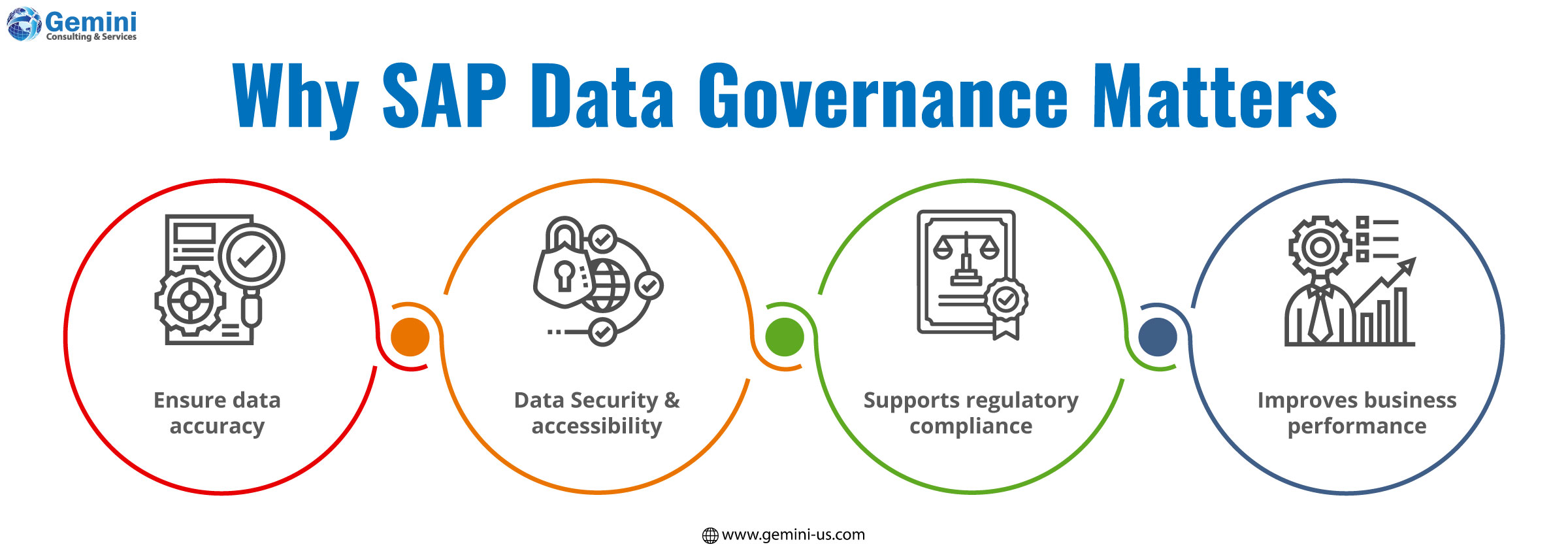
SAP data governance provides the policies, processes, technologies, and accountability needed to ensure data remains accurate, secure, accessible, and compliant throughout its lifecycle. A well-governed SAP environment minimizes data sprawl, improves reporting accuracy, supports regulatory compliance, and enhances overall business performance.
Build a Strong Governance Framework
Successful SAP data governance starts with clearly defined ownership and accountability.
Organizations should establish an executive data governance committee responsible for setting governance policies, resolving cross-functional issues, and aligning data initiatives with business objectives. Executive sponsorship is equally important to drive organizational commitment and ensure governance remains a strategic priority.
Alongside leadership, appoint business data stewards and data owners to manage daily data quality, enforce standards, and oversee specific business domains. Clearly defined responsibilities reduce ambiguity and improve accountability across the organization.
Strengthen Master Data Governance
Master data, including customer, vendor, material, and financial information, forms the backbone of every SAP environment. Errors in master data can affect multiple business processes, leading to operational inefficiencies and inaccurate reporting.
Centralizing master data creation, approval, and distribution helps establish a single source of truth across SAP landscapes. Standardized data formats, validation rules, and controlled workflows prevent duplicate records while ensuring consistency between on-premise and cloud-based systems.
Regular data quality assessments should measure completeness, accuracy, consistency, and duplication rates, enabling organizations to identify issues before they impact business operations.
Automate Data Quality Controls
Manual data validation becomes increasingly difficult as SAP environments grow in size and complexity.
Embedding automated validation rules directly into business processes helps ensure data is complete, unique, and accurate at the point of entry. Native SAP capabilities such as Business Rule Framework plus (BRFplus) enable organizations to automate business rules, reduce human error, and maintain consistent data quality across systems.
Automation not only improves operational efficiency but also minimizes costly downstream corrections.
Align Security with Data Governance
Data governance extends beyond quality. It also plays a critical role in protecting sensitive business information.
Role-based access controls (RBAC) ensure employees only access data required for their job responsibilities, reducing the risk of unauthorized changes or data exposure. Sensitive information should be protected through encryption, secure identity management, and comprehensive audit logging.
Organizations should also apply privacy controls throughout the data lifecycle by masking or anonymizing sensitive information in development and testing environments while maintaining complete traceability of user activities.
Manage the Entire Data Lifecycle
Data governance should cover every stage of the data lifecycle—from creation and usage to archival and deletion.
As SAP databases continue to grow, retaining unnecessary historical data increases storage costs, degrades system performance, and creates unnecessary compliance risks. Automated lifecycle management helps organizations archive and securely dispose of data according to regulatory and corporate retention requirements.
Establishing retention policies ensures only relevant business information remains active while historical records are preserved or removed appropriately.
Support Regulatory Compliance
Modern organizations must comply with evolving privacy regulations such as The General Data Protection Regulation (GDPR), California Consumer Privacy Act (CCPA), and other regional data protection requirements.
An effective SAP governance framework incorporates compliance into daily operations by defining policies for data retention, consent management, legal holds, and secure deletion. Maintaining detailed audit trails and consistent governance processes simplifies regulatory reporting while reducing the risk of penalties and reputational damage.
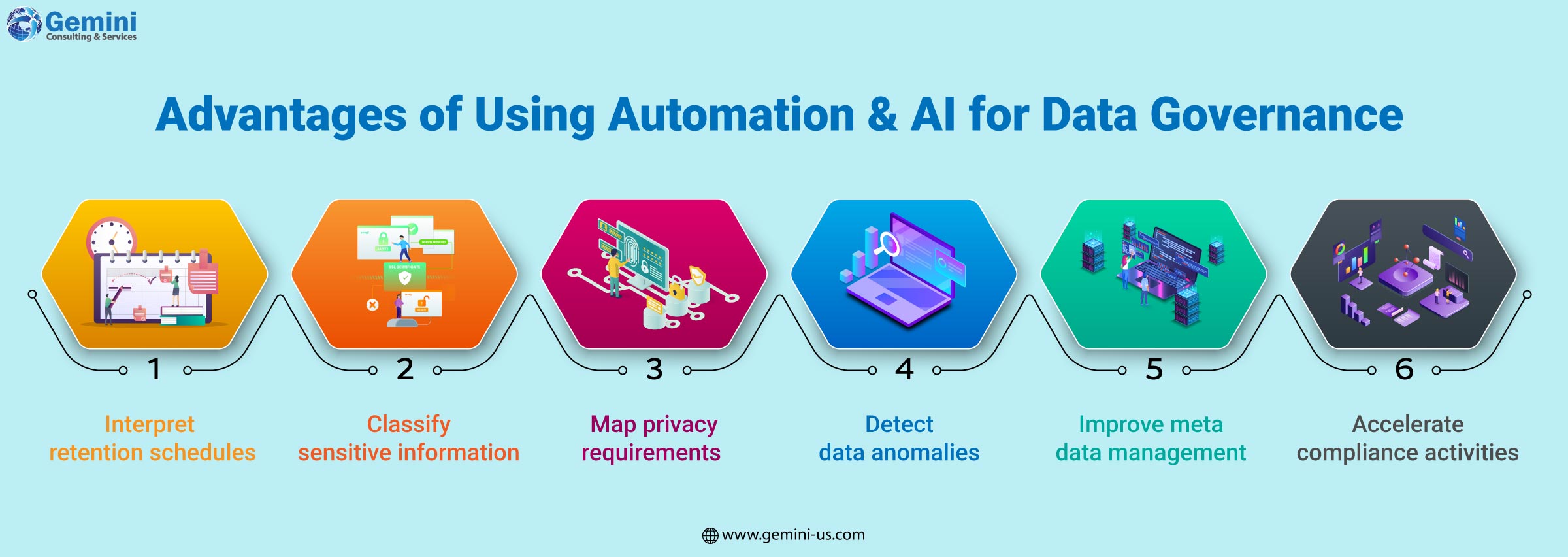
As SAP landscapes become more complex, automation and artificial intelligence are playing an increasingly important role in governance.
AI-powered solutions can interpret retention schedules, classify sensitive information, map privacy requirements to SAP configurations, and automate policy enforcement. Organizations can also use AI to detect data anomalies, improve metadata management, and accelerate compliance activities across structured and unstructured data.
By reducing manual effort and increasing consistency, intelligent automation enables governance programs to scale efficiently across large enterprise environments.
Build a Data Governance Culture
Technology alone cannot deliver successful governance. Employees across the organization must understand the importance of data quality and their role in maintaining it.
Regular training, clear governance policies, and ongoing communication help establish accountability and encourage responsible data management practices. When leadership actively supports governance initiatives, they become embedded within everyday business processes rather than treated as isolated compliance projects.
At Gemini Consulting & Services, we give utmost priority in ensuring that client data is protected. Whether it is about implementation or maintenance of SAP system, we focus on data governance for protection and compliance. Contact us to learn how we can provide a step-by-step strategy to implement SAP data governance.
Conclusion
SAP data governance is an ongoing business discipline that supports operational efficiency, regulatory compliance, cybersecurity, and digital transformation. By establishing strong governance structures, centralizing master data management, automating quality controls, strengthening security, and managing data throughout its lifecycle, organizations can create trusted, high-quality data that drives better business outcomes.
As enterprises continue their journey toward SAP S/4HANA, cloud adoption, and AI-driven innovation, investing in a comprehensive SAP data governance strategy will be essential for building secure, resilient, and future-ready business environments.