
Moving to SAP S/4HANA is far more than a system upgrade, it is a comprehensive transformation that impacts business processes, data structures, and the way employees operate. Organizations pursue this shift to gain faster processing, real-time insights, and standardized workflows.
However, many initiatives encounter setbacks due to unclear direction, underestimated complexity, or insufficient involvement from business teams. The encouraging part is that most of these challenges are well-known and can be addressed with the right approach.
Let’s look at the most common obstacles and practical ways to manage them effectively.
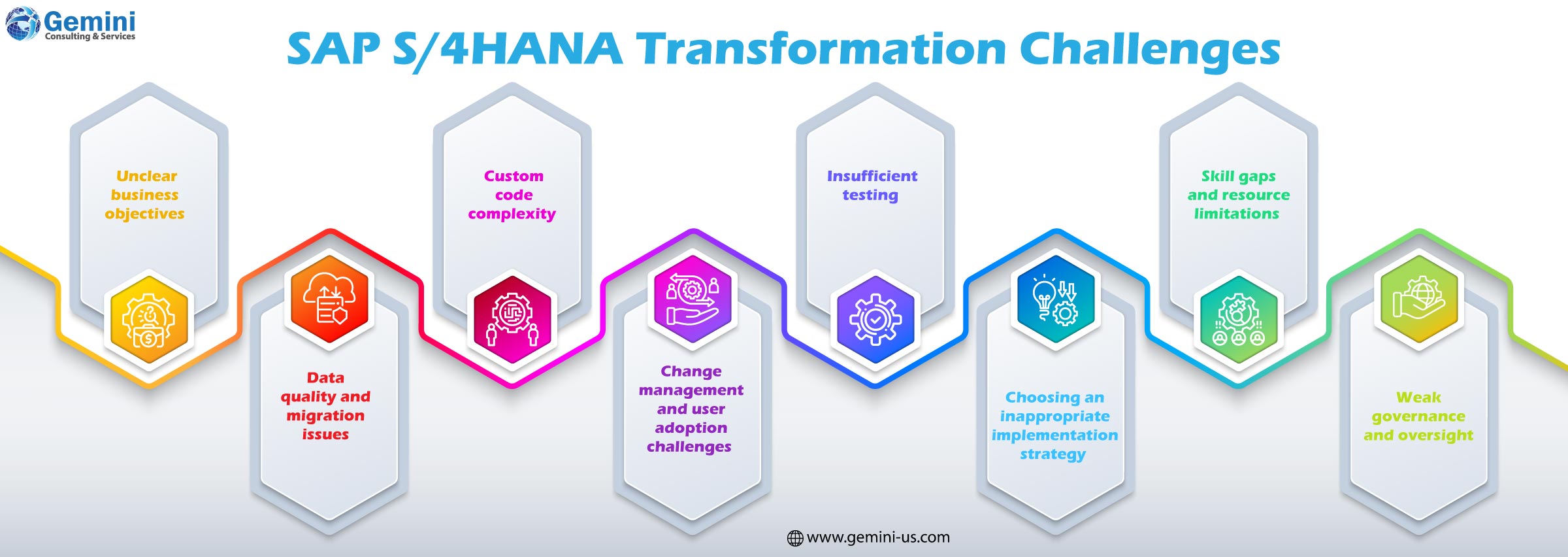
1. Unclear Business Objectives
A frequent mistake is treating S/4HANA as a technical migration instead of a strategic transformation. Without clearly defined goals, projects tend to lose focus, leading to shifting priorities, expanding scope, and pressure on budgets and timelines.
How to Address It:
Establish strong alignment among leadership and define measurable outcomes—such as streamlined processes, faster financial closing, or improved reporting. Early and continuous involvement of business stakeholders ensures the initiative remains focused on delivering value.
2. Data Quality and Migration Challenges
Data issues are one of the biggest risks in any implementation. Legacy systems often contain duplicate, outdated, or inconsistent information, which can negatively affect the new environment if transferred without preparation.
How to Address It:
Start data cleansing early, migrate only relevant data, and conduct multiple trial migrations. Clean and well-structured data supports smoother operations and more reliable analytics after go-live.
3. Complexity of Custom Code
Over time, organizations accumulate extensive custom developments in their legacy systems. Many of these may not align with S/4HANA’s simplified and standardized architecture.
How to Address It:
Review custom code early in the project. Remove outdated elements and retain only what adds real business value. Focus on improving processes rather than replicating legacy systems.
4. Change Management and User Adoption
New interfaces, automation, and advanced analytics can be challenging for users accustomed to older systems. Without proper preparation, resistance can slow adoption.
How to Address It:
Prioritize communication and training. Offer role-based learning, involve users during testing, and maintain transparency throughout the project. Ultimately, success depends on how well users embrace the new system.
5. Insufficient Testing
Testing is often shortened due to time constraints, which can result in unresolved issues appearing after deployment and disrupting operations.
How to Address It:
Allocate sufficient time for testing, including unit, integration, and user acceptance testing. Engaging business users in validation helps ensure system stability and builds confidence.
6. Choosing the Wrong Implementation Strategy
Selecting the appropriate approach—whether Greenfield, Brownfield, or a hybrid model—has long-term implications. A poor choice can either limit innovation or create unnecessary disruption.
How to Address It:
Evaluate system complexity, business readiness, and long-term goals. The chosen approach should align with future growth and transformation objectives.
7. Skill Gaps and Resource Limitations
S/4HANA introduces new technologies and methodologies. Relying solely on legacy expertise can limit outcomes and increase project risks.
How to Address It:
Invest in training internal teams, bring in experienced consultants, and ensure knowledge transfer throughout the project. Strong capabilities improve both speed and quality of execution.
8. Weak Governance and Oversight
Large transformation programs require clear decision-making structures. Without proper governance, delays, misalignment, and confusion over responsibilities can arise.
How to Address It:
Define roles and responsibilities early, establish governance frameworks, and maintain executive sponsorship. Clear oversight keeps the project on track.
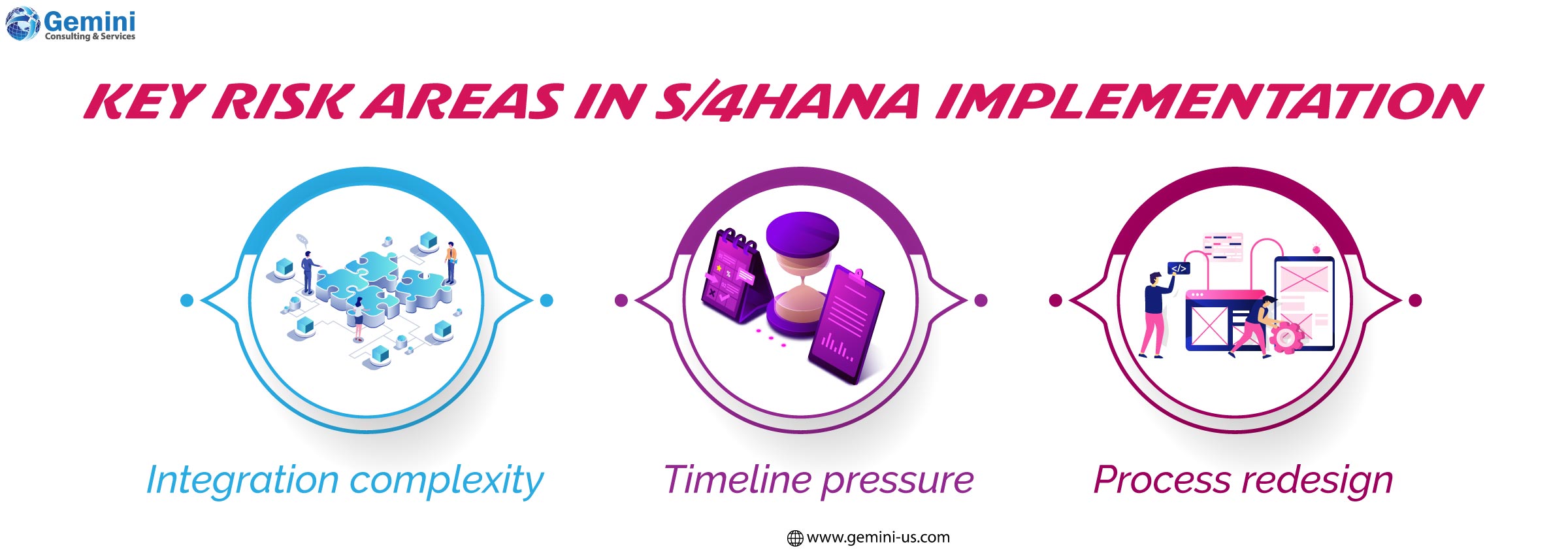
- Integration Complexity: Connecting with existing and third-party systems can be challenging and requires careful planning.
- Timeline Pressure: Tight deadlines, especially due to end-of-support milestones, can strain resources and budgets.
- Process Redesign: Aligning legacy processes with standardized S/4HANA models often requires significant rethinking.
Why Implementations Struggle
Most implementation issues are not caused by the technology itself. Instead, they stem from poor planning, limited business engagement, and inadequate preparation for change.
Recognizing these risks early allows organizations to take corrective actions before problems escalate.
Gemini Consulting & Services delivers SAP S/4HANA implementation solutions tailored for businesses across diverse industries. Contact us to discover how our services can improve operational efficiency and drive higher productivity for your enterprise.
Conclusion
Implementing SAP S/4HANA is complex, but it also presents a valuable opportunity to modernize operations and unlock new efficiencies.
Organizations that succeed take a proactive approach: they plan thoroughly, simplify processes, invest in people, and maintain strong collaboration between business and IT. Ultimately, transformation success depends on aligning technology with people, processes, and long-term strategy.