Artificial Intelligence (AI) is redefining how organizations develop software, manage operations, and deliver digital experiences. As enterprises embrace automation and intelligent technologies, the demand for development platforms that offer greater flexibility, speed, and scalability continues to grow.
Workday Build is designed to support this transformation by providing a unified environment for developing enterprise applications, automating business workflows, and creating AI-powered agents. By combining these capabilities, the platform helps organizations modernize business processes, enhance productivity, and respond more effectively to evolving workforce and financial management needs.
Leveraging Workday's established human resources and financial management ecosystem, Workday Build enables developers, enterprises, and technology partners to create applications powered by reliable business data. Its approach emphasizes faster innovation without compromising the security, compliance, and governance standards essential to enterprise operations.
The growing adoption of AI highlights the significance of platforms such as Workday Build. According to Grand View Research, the worldwide AI market, valued at approximately $390.9 billion in 2025, is expected to reach $539.5 billion in 2026 and expand to $3,497.3 billion by 2033. This represents a compound annual growth rate (CAGR) of 30.6% between 2026 and 2033.
Similarly, Persistent Market Research estimates that the global market for AI in software development will increase from $718.3 million in 2026 to $9,165.4 million by 2033, reflecting a CAGR of 43.5%.
These projections demonstrate the increasing importance of AI-assisted software engineering. Organizations are adopting intelligent coding tools and development assistants to minimize repetitive programming activities, shorten delivery cycles, and improve the efficiency of development teams.
Understanding Workday Build
Workday Build is a comprehensive enterprise development platform that integrates application creation, business process orchestration, enterprise data connectivity, and AI agent development within a single ecosystem. Instead of requiring organizations to adopt multiple independent tools, Workday Build combines established Workday development technologies with emerging AI capabilities to provide a more streamlined development experience.
A central component of this ecosystem is Workday Extend, which enables developers to build customized applications that operate within the Workday environment. These applications can utilize existing business objects, user experiences, security configurations, and organizational workflows.
Workday Build extends this foundation by introducing additional capabilities for intelligent automation, agent development, and application connectivity. As a result, organizations can create solutions that not only support traditional business processes but also incorporate AI-driven decision support and task execution. By bringing these functions together, Workday Build helps reduce development complexity while allowing applications and intelligent agents to operate within a consistent enterprise governance framework.
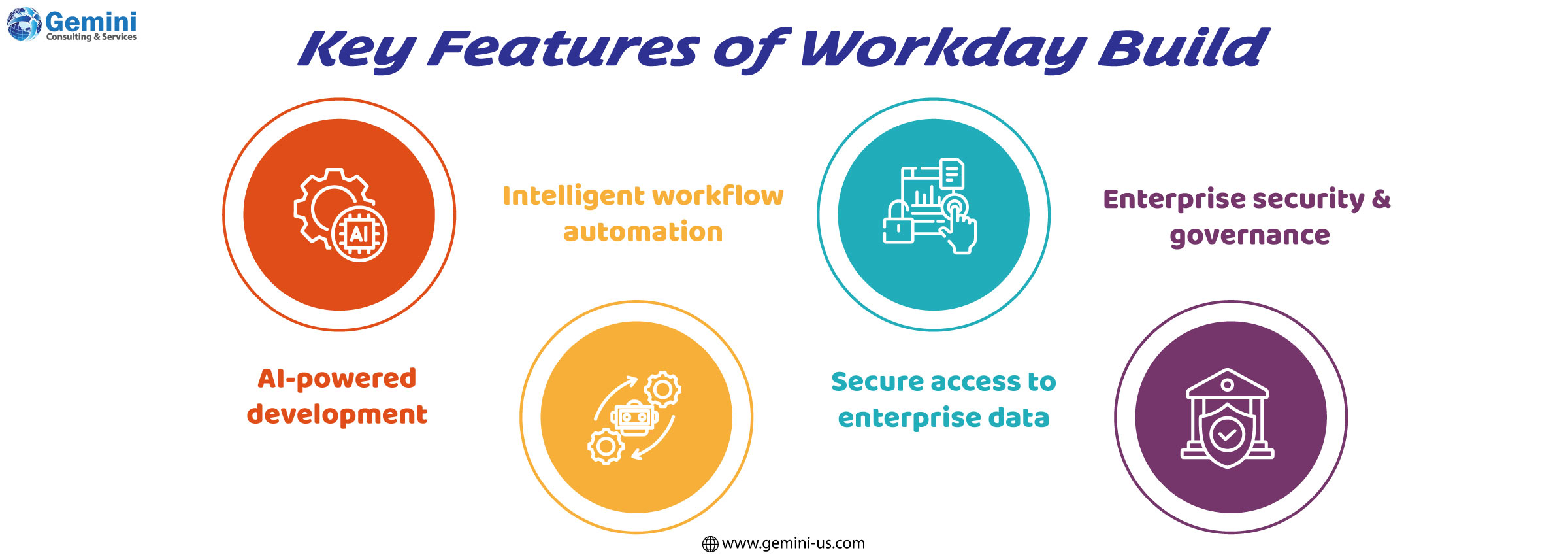
1. AI-Assisted Application Development
One of Workday Build's key capabilities is its use of artificial intelligence to simplify and accelerate enterprise software development.
AI-powered development tools can assist programmers with generating code, creating application components, designing workflows, and identifying suitable implementation approaches. These capabilities help development teams spend less time on repetitive technical activities and more time addressing business requirements. The platform's developer copilot provides contextual assistance during application development, supporting faster problem-solving and more efficient solution delivery.
Natural-language capabilities further simplify the development experience by allowing users to describe application requirements in everyday language. This can make selected development activities more approachable for individuals with varying levels of programming experience.
Through Developer Agent, developers can work with familiar tools such as Claude Code, Cursor, Visual Studio Code, and Google Antigravity to develop applications and AI agents. This flexibility allows development teams to incorporate Workday capabilities into their existing workflows rather than relying entirely on unfamiliar tools or processes.
2. Smarter Business Process Automation
Modern enterprises depend on connected workflows to manage operations efficiently. Workday Build supports this requirement by bringing workflow automation and orchestration into the application development lifecycle.
Developers can coordinate activities across applications, automate routine processes, and connect different business functions with less dependence on individually developed integrations. An important capability in this area is Workday Flowise Agent Builder, which provides a visual environment for designing and managing AI agents. Using this capability, organizations can configure agents to support defined business activities, interact with enterprise systems, and automate appropriate operational tasks.
For example, intelligent agents may assist with employee-related requests, information retrieval, workflow coordination, or other repetitive administrative processes, depending on their configuration and authorized access.
Combining workflow orchestration with AI-driven capabilities can help organizations reduce manual intervention, improve process consistency, and enable employees to focus on higher-value responsibilities.
3. Trusted and Secure Enterprise Data Connectivity
The effectiveness of enterprise AI applications depends heavily on the quality, relevance, and accessibility of the information they use. Workday Build enables developers to create applications and agents that interact with authorized HR, financial, and operational information maintained within the Workday ecosystem. Rather than introducing unnecessary data replication, applications can access relevant information through supported enterprise interfaces and established security mechanisms.
The platform's support for the Model Context Protocol (MCP) provides a standardized approach for connecting AI agents with Workday APIs and enterprise capabilities. This approach can simplify integration development by reducing the need to build entirely new connectivity mechanisms for individual AI applications. Access to authoritative business information also helps organizations maintain data consistency and minimize challenges associated with duplicated or outdated records.
By combining reliable enterprise data with AI capabilities, Workday Build supports the development of solutions that are more context-aware and aligned with organizational processes.
4. Built-In Enterprise Security and Governance
As organizations introduce AI-powered applications and autonomous agents, protecting confidential business information becomes increasingly important.
Enterprise systems frequently handle sensitive employee records, payroll details, financial transactions, and other business-critical information. Any development platform interacting with these systems must therefore support appropriate access management and operational oversight. Workday Build leverages Workday's existing security architecture and governance capabilities to help organizations manage how applications and agents interact with enterprise resources.
Its integrated security approach supports permission-based access, controlled interactions, and consistent governance practices across the development environment. This becomes particularly important as organizations expand the use of AI agents capable of performing activities traditionally handled by employees.
By maintaining oversight of both human and AI-enabled operations, businesses can pursue automation initiatives while supporting their security and compliance objectives.
Expanding Opportunities Through an Open Developer Ecosystem
Beyond its technical capabilities, Workday Build aims to encourage greater participation from developers, technology providers, and enterprise innovation teams.
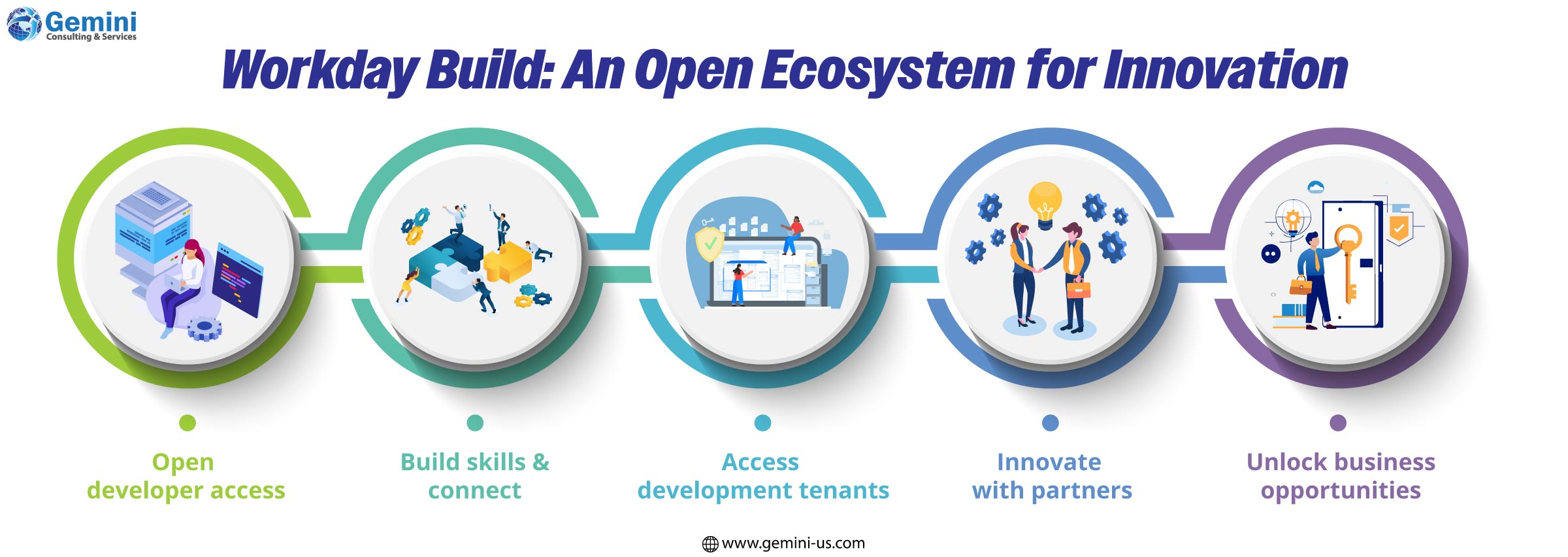
Workday is expanding access to development resources such as technical documentation, APIs, and MCP-related tools, allowing developers to explore available capabilities and identify new application opportunities. The Workday Developer Program provides a pathway for professionals interested in building expertise within the Workday ecosystem. Participants can explore learning resources, engage with the developer community, and strengthen their understanding of Workday application development.
Eligible participants may also apply for personal development tenant access through the available beta program, subject to applicable requirements and availability. Another important part of this ecosystem is the Workday Marketplace, where customers can discover solutions created by Workday and its technology partners.
Through the Built on Workday program, partners can design and distribute applications developed to address specific business requirements.
This gives enterprises greater flexibility in deciding whether to develop tailored applications internally or adopt existing solutions offered through the marketplace. For technology partners and independent developers, the expanding ecosystem can create opportunities to develop specialized products, collaborate with other professionals, and deliver innovative enterprise solutions.
What Workday Build Means for Existing Workday Extend Users
Organizations that have already invested in Workday Extend can view Workday Build as an evolution of their existing development environment rather than an entirely new platform requiring a complete transition.
Workday Extend continues to serve as a foundational technology for creating customized applications and implementing business-specific functionality within Workday. The introduction of Workday Build broadens these capabilities by incorporating AI-assisted development, intelligent agents, and enhanced orchestration opportunities. For existing Extend customers, this creates the potential to introduce AI-enabled functionality into established applications and workflows.
For instance, an organization may explore how an AI agent could interact with an existing Extend application to retrieve authorized information, initiate supported business activities, or assist employees with routine processes. Such possibilities could help businesses increase the value of their existing development investments while gradually introducing more advanced automation.
However, organizations should assess their current licensing arrangements, available platform capabilities, and AI implementation requirements before proceeding with new initiatives.
Understanding the features supported by their Workday edition, along with any additional licensing or access requirements, is essential for effective technology planning and investment decisions.
Workday Build offers several potential advantages for organizations seeking to modernize their application development strategies.
Accelerated Development Cycles: AI-assisted coding and reusable platform capabilities can reduce manual development effort and support faster application delivery.
Improved Operational Efficiency: Intelligent workflow automation can help minimize repetitive tasks and streamline business activities across departments.
Better Utilization of Enterprise Data: Secure connections to Workday information allow applications and agents to work with relevant business context.
Greater Development Flexibility: Support for familiar development environments and integration standards enables teams to adopt tools that align with their existing expertise.
Consistent Governance: Integration with Workday's security and permission structures helps organizations maintain control over application and agent activities.
Expanded Innovation Opportunities: Access to developer resources, partner solutions, and marketplace offerings can help businesses explore new use cases without developing every capability internally.
Together, these benefits can help enterprises create more connected digital experiences while improving the efficiency of their technology investments.
The Future of AI-Driven Enterprise Application Development
Enterprise software development is moving toward an environment in which AI assistance, intelligent automation, and integrated business data play increasingly central roles.
Organizations are no longer focused solely on creating applications that record information or execute predefined workflows. They are also exploring solutions capable of understanding business context, supporting decisions, and coordinating tasks through intelligent agents. Workday Build reflects this evolution by bringing traditional application development and emerging AI capabilities into a shared enterprise environment.
Its integration of AI-assisted development, workflow orchestration, standardized connectivity, and governed data access provides a foundation for building more intelligent business solutions.
As enterprise AI adoption expands, the ability to connect AI agents with reliable business systems will become an important consideration for organizations pursuing digital transformation. Platforms such as Workday Build may help bridge the gap between experimental AI applications and practical enterprise implementations by providing access to established business processes, information, and security controls.
For developers, this creates opportunities to build more sophisticated solutions using familiar tools and enterprise-ready technologies. For businesses, it offers a pathway toward improving productivity, simplifying operations, and adapting more quickly to changing requirements.
Empower your enterprise with greater agility, efficiency, and innovation through Workday’s flexible solutions. Connect with Gemini Consulting & Services to discover how Workday Build can help streamline operations, enhance productivity, and accelerate your organization’s digital transformation.
Conclusion
Workday Build introduces a more integrated approach to enterprise application development by combining AI-powered development assistance, workflow automation, intelligent agent capabilities, and secure access to business information.
Building upon Workday Extend and the broader Workday ecosystem, the platform enables organizations to explore new development possibilities while continuing to use established enterprise infrastructure. Its growing developer ecosystem, support for open integration standards, and emphasis on security and governance make it relevant to businesses seeking to adopt AI responsibly.
As organizations continue investing in intelligent technologies, Workday Build has the potential to play an important role in helping development teams create scalable, connected, and business-focused solutions.
Ultimately, its value extends beyond simplifying application development. It offers organizations an opportunity to rethink how applications, data, employees, and AI agents can work together to support the next generation of enterprise operations.