
In today's business environment, sustainability is no longer a corporate buzzword. It has become a strategic necessity. Rising environmental concerns, stricter regulations, and growing consumer expectations are pushing organizations to rethink how they operate. At the center of this transformation is technology, which is helping businesses reduce their environmental impact while improving efficiency, profitability, and long-term resilience.
From artificial intelligence (AI) and the Internet of Things (IoT) to cloud computing and blockchain, modern technologies are enabling companies to achieve sustainability goals in ways that were once unimaginable. These innovations are not only helping organizations reduce waste and emissions but are also creating new opportunities for growth through smarter and more responsible business practices.
Why Sustainability Matters in Business
Sustainability refers to meeting current business needs without compromising the ability of future generations to meet their own. It extends beyond environmental protection and includes social responsibility and economic viability. Companies today are increasingly adopting the "triple bottom line" approach, which focuses on three key dimensions:
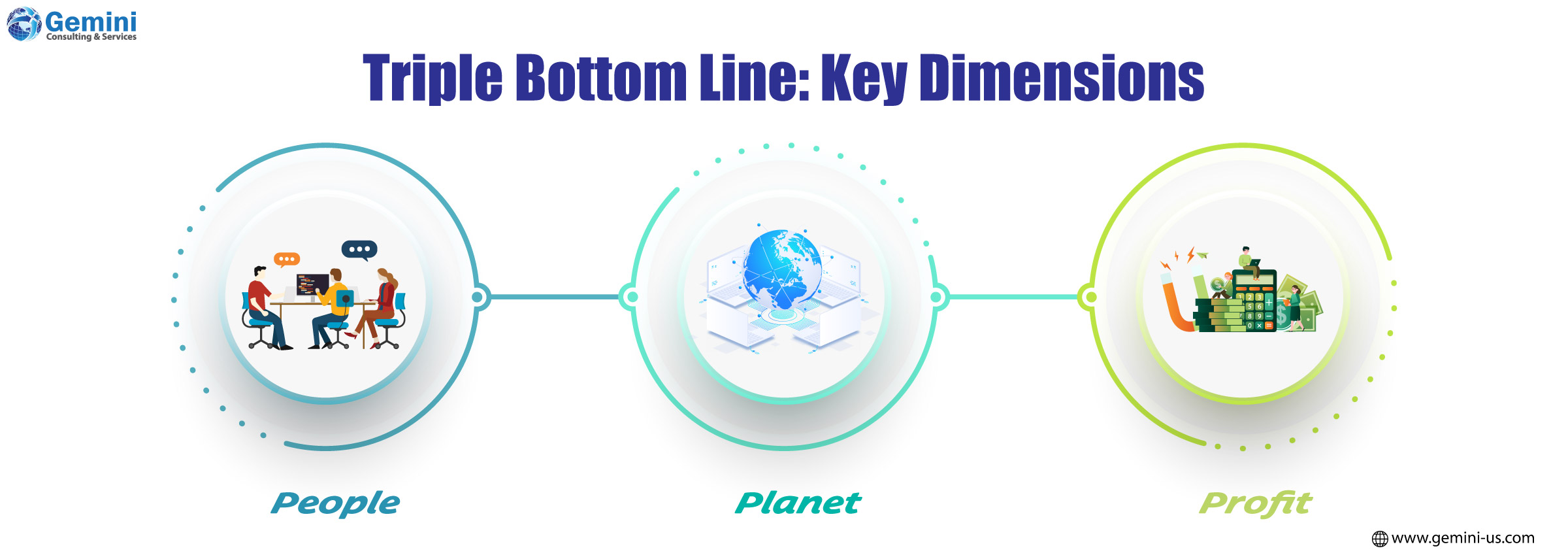
- People: Ensuring fair labor practices, employee well-being, and positive community impact.
- Planet: Minimizing environmental impact by promoting sustainable resource use and reducing greenhouse gas emissions.
- Profit: Maintaining financial success while operating sustainably.
Governments worldwide are introducing stricter environmental regulations, while consumers are becoming more conscious of the social and environmental impact of their purchasing decisions. Businesses that fail to embrace sustainability risk losing market relevance, customer trust, and competitive advantage.”
Technology as a Catalyst for Sustainable Transformation
Technology is accelerating sustainability efforts by helping organizations measure environmental impact, optimize resource consumption, and transition toward circular business models. Instead of relying on estimates and manual processes, companies can now use real-time data and intelligent systems to make environmentally responsible decisions.
Artificial Intelligence and Predictive Analytics
Artificial intelligence has emerged as one of the most powerful tools for sustainable business operations. AI systems can process massive amounts of data to identify patterns, predict outcomes, and automate decision-making.
For example, predictive analytics helps businesses forecast customer demand more accurately, reducing overproduction and inventory waste. In facilities management, AI-powered systems automatically regulate lighting, heating, cooling, and water consumption based on occupancy levels and weather conditions. This minimizes unnecessary resource use and lowers operational costs.
AI is also helping organizations optimize supply chains, improve logistics efficiency, and identify opportunities to reduce carbon emissions across operations.
Internet of Things (IoT)
The Internet of Things (IoT) enables connectivity among equipment, sensors, and devices, allowing organizations to gain real-time insights into their operations. In manufacturing settings, IoT-based sensors track machine performance continuously and help detect potential maintenance issues early, reducing the likelihood of unexpected breakdowns.
This predictive maintenance approach reduces downtime, extends equipment lifespan, and minimizes material waste. IoT also helps businesses track energy consumption, optimize production processes, and improve resource efficiency.
Beyond manufacturing, IoT-powered smart buildings can automatically adjust energy usage, reducing electricity consumption and supporting sustainability targets.
Cloud Computing and Big Data
Cloud computing provides businesses with the infrastructure needed to collect, store, and analyze data from across their operations. By consolidating information into centralized platforms, organizations gain greater visibility into their environmental performance.
One major advantage is the ability to track indirect emissions generated throughout the value chain, often referred to as Scope 3 emissions. Access to comprehensive data allows companies to identify sustainability risks, improve reporting accuracy, and make more informed investment decisions.
Big data analytics also supports transparency by enabling businesses to measure environmental performance and demonstrate progress toward sustainability goals.
Blockchain for Transparency and Circular Economy
Supply chain transparency is a growing priority for both businesses and consumers. Blockchain technology creates secure and tamper-proof records of transactions and product movements throughout the supply chain.
This transparency allows companies to verify sourcing practices, monitor product lifecycles, and improve accountability. It also supports circular economy initiatives by making it easier to recover, recycle, and reuse materials.
Consumers these days are quite aware, and they look at product sourcing before deciding on buying. Blockchain-enabled traceability can provide this information, strengthening trust and supporting sustainable consumption.
Digital Twins
Digital twins are virtual replicas of physical assets, facilities, or entire supply chains. These models allow businesses to simulate operations before implementing changes in the real world.
Organizations can test different production scenarios, evaluate resource usage, and identify opportunities to reduce waste. By optimizing processes virtually, companies can minimize environmental impact while avoiding costly trial-and-error approaches.
Digital twins are particularly valuable in manufacturing, infrastructure planning, and energy management, where small improvements can result in significant sustainability gains.
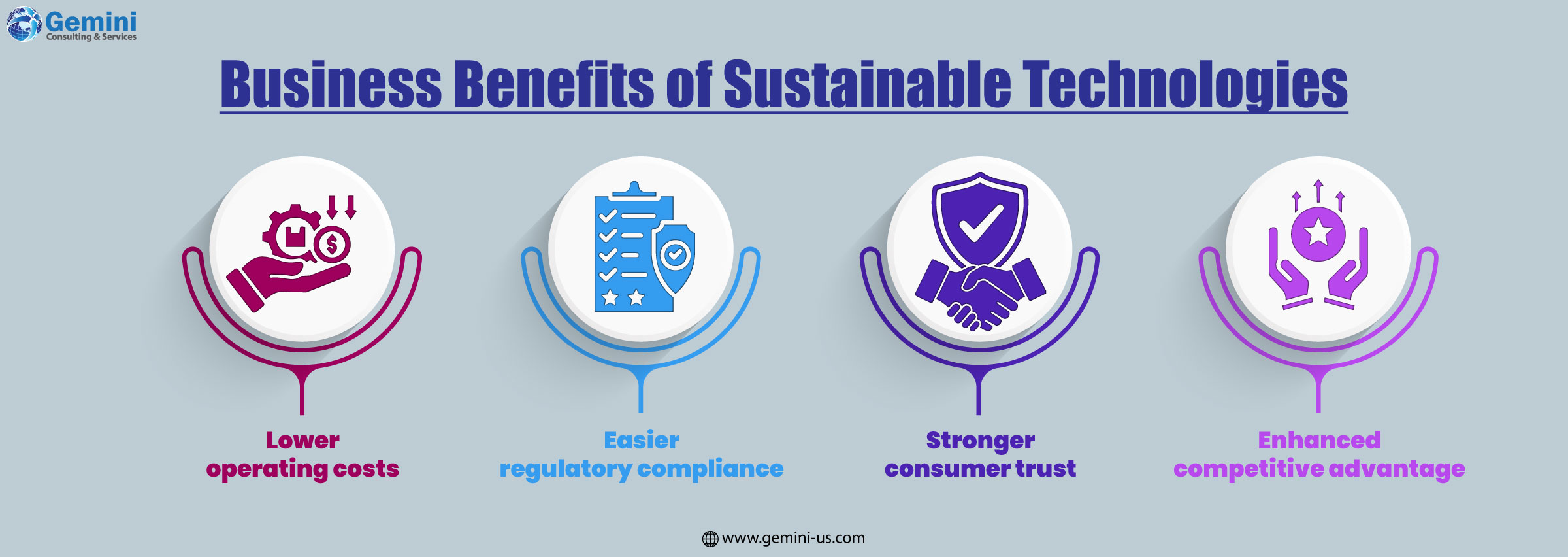
Sustainability is often viewed as a cost, but technology is proving that environmental responsibility can generate measurable business value.
Lower Operating Costs
Digital sustainability strategies improve efficiency by reducing energy consumption, material waste, and resource usage. Automated systems and data-driven decision-making help organizations streamline operations, often resulting in substantial cost savings.
Easier Regulatory Compliance
Environmental reporting requirements are becoming more complex. Technology enables businesses to collect accurate, auditable data that simplifies compliance with evolving regulations and sustainability standards.
Stronger Consumer Trust
Modern consumers increasingly support environmentally responsible brands. Digital platforms, QR-code traceability systems, and transparent reporting allow companies to demonstrate their sustainability commitments and build stronger customer relationships.
Enhanced Competitive Advantage
Organizations that integrate sustainability into their business models are often better positioned to attract investors, customers, and talented employees who prioritize environmental and social responsibility.
The AI Sustainability Paradox
While technology offers enormous sustainability benefits, it also presents challenges. AI systems, cloud infrastructure, and data centers require significant computing power, contributing to energy consumption and carbon emissions.
This creates a paradox: the technologies that help organizations reduce emissions can also increase environmental impact if not managed responsibly.
However, the net benefits can be substantial when AI is applied strategically. Research suggests that AI-driven initiatives can significantly reduce emissions by improving operational efficiency, resource optimization, and supply chain management.
The key is ensuring that organizations evaluate both the environmental costs and benefits of AI projects. Businesses must measure whether the emissions generated by AI systems are outweighed by the emissions they help eliminate.
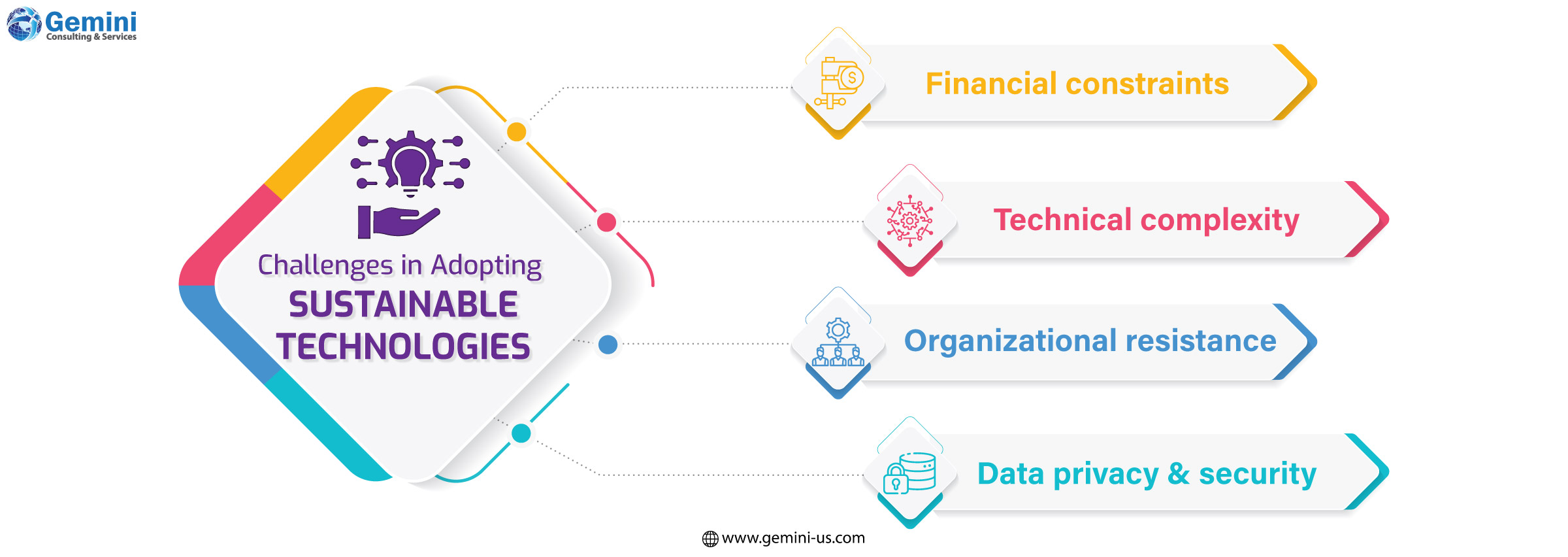
Despite the benefits, businesses often face barriers when implementing sustainable technologies.
Financial Constraints
Advanced technologies may require significant upfront investment. Small and medium-sized businesses, in particular, may struggle with implementation costs.
Technical Complexity
Integrating new technologies into existing systems can be challenging, especially for organizations with legacy infrastructure.
Organizational Resistance
Employees and leadership teams may be hesitant to embrace new sustainability initiatives.
Data Privacy and Security
As businesses collect more sustainability-related data, protecting sensitive information becomes increasingly important.
The Future of Sustainable Technology
The future of sustainable business will be shaped by continuous technological innovation. Renewable energy systems will become more affordable and efficient, enabling wider adoption across industries. Smart cities powered by AI and IoT will optimize energy use, transportation, and waste management. Circular economy models will gain momentum as businesses design products for reuse, repair, and recycling.
Emerging technologies such as advanced recycling systems, carbon capture solutions, and blockchain-enabled supply chains will further strengthen sustainability efforts. At the same time, startups will continue introducing innovative solutions that challenge traditional business models and accelerate environmental progress.
Recent findings from the World Economic Forum indicate that nearly two-thirds of technology leaders expect artificial intelligence and digital technologies to help reduce corporate greenhouse gas emissions by 6% to 30% in the coming years. While AI has the potential to drive significant environmental improvements, its greatest value often comes from delivering smaller efficiency gains across multiple business functions that collectively create a substantial impact.
Organizations are increasingly investing in AI-powered solutions to support their sustainability objectives. The primary focus areas include enhancing operational efficiency, optimizing the use of resources, and improving decision-making through better analysis of environmental, social, and governance (ESG) data. Businesses are also leveraging AI to improve the performance and energy efficiency of their IT infrastructure.
The adoption of these technologies is expected to accelerate, with more than half of organizations planning to expand AI deployment in sustainability-related initiatives by 2028. In addition, companies are placing greater emphasis on reducing emissions across supply chains and improving product lifecycle management. These efforts demonstrate how AI is evolving from a productivity tool into a strategic enabler of sustainable business transformation, helping organizations balance environmental responsibility with operational and financial performance.
Gemini Consulting & Services offer digital tools and technologies that assist enterprises to build sustainable business practices. Contact us to learn how your company can benefit from our technologies.
Conclusion
Technology is transforming sustainability from an aspirational goal into a practical business strategy. Through AI, IoT, cloud computing, blockchain, and digital twins, organizations can reduce waste, optimize resources, improve transparency, and lower emissions while enhancing profitability.
The most successful companies will be those that integrate technology and sustainability into a unified strategy rather than treating them as separate priorities. As environmental expectations continue to rise, businesses that leverage technology responsibly will not only contribute to a healthier planet but also secure a stronger competitive position in the future economy.
Sustainability and technology are no longer independent forces, they are becoming inseparable drivers of business success in the digital age.