
Technological advancements have always played a crucial role in shaping modern society. In recent years, the rise of the Internet of Things (IoT), coupled with the power of 5G technology, has begun to redefine the future of urban living. These innovations promise to transform cities into interconnected hubs where devices communicate seamlessly, enhancing everything from traffic management to healthcare services.
IoT and 5G: The Backbone of Smart Cities
The foundation of IoT is the integration of sensors and devices that gather and exchange data. This connectivity allows for smarter decision-making, efficient resource management, and improved infrastructure. When combined with 5G, which offers faster speeds, reduced latency, and more reliable connections, IoT reaches its full potential. The shift from 4G to 5G technology—offering speeds up to 100 times faster and latency as low as 1 millisecond—opens up new possibilities for real-time data processing and connectivity on a much larger scale.
5G IoT is revolutionizing industries across the globe. With vast networks of sensors and devices capable of communicating in real-time, IoT is enhancing sectors like healthcare, manufacturing, agriculture, automotive mobility, and more. This shift toward real-time intelligence is particularly transformative for the development of smart cities.
5G mainly focuses on multiple-input multiple-output (MIMO) systems and device-to-device communication. One of its key advancements is the use of millimeter-wave technology, which enables extremely high data rates that are essential for applications such as high-definition services, video streaming, AR, and autonomous vehicles, among others.
With AI-powered 5G IoT systems capable of reducing congestion and accidents, enhancing emergency responses, and creating energy-efficient infrastructure, cities are well on their way to becoming more interconnected, efficient, and environmentally friendly. These developments will not only improve the quality of urban living but also help cities meet their climate goals and emission targets more effectively.
One of the key roles of 5G in smart city development is its capacity to support large-scale IoT connectivity. With the ability to link up to one million devices within a square kilometre, 5G enables cities to deploy a wide range of sensors, cameras, and IoT systems for real-time data collection. This high level of connectivity is essential for building smart city ecosystems that rely on data-driven planning and decision-making.
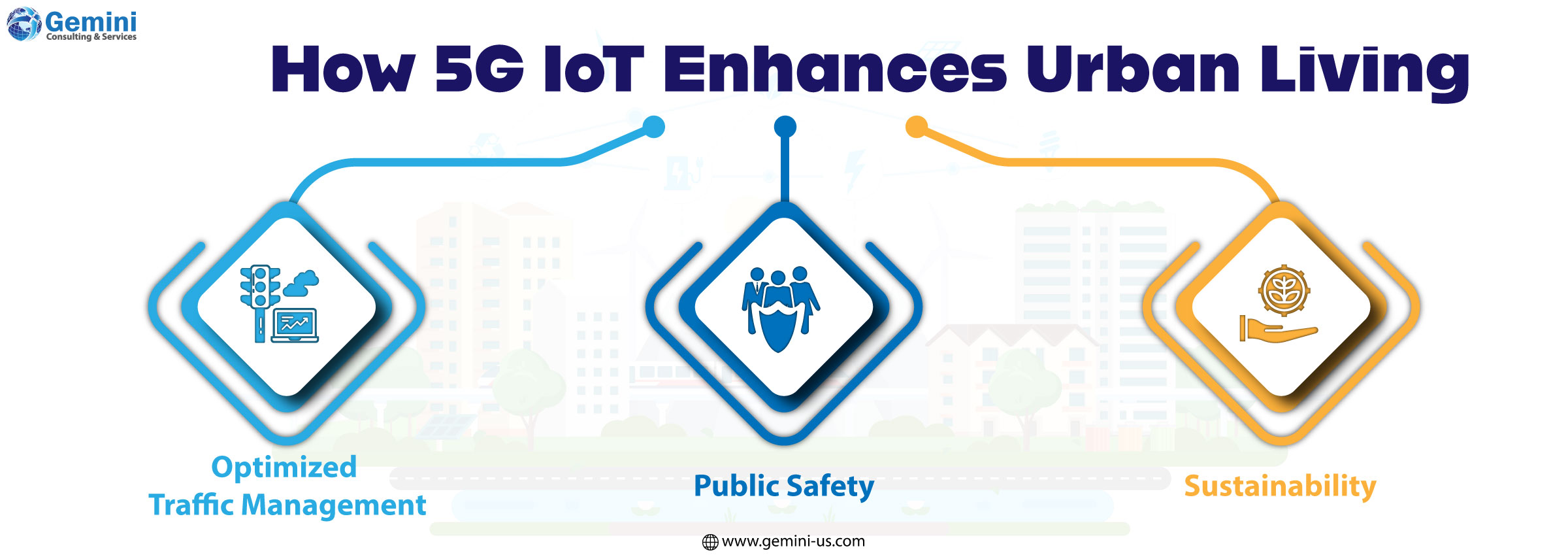
Smart cities are urban environments where IoT devices are deployed to optimize daily activities and improve the quality of life for residents. By integrating 5G-powered IoT networks, cities can address major challenges such as traffic congestion, waste management, energy efficiency, and public safety. These advancements are not just theoretical—they are already being implemented, and by 2025, we are likely to see even more sophisticated smart city ecosystems.
Several key areas in which IoT and 5G are enhancing urban living include:
- Optimized Traffic Management: AI-powered systems integrated with 5G can analyze traffic data in real-time, reducing congestion, improving traffic flow, and even predicting and preventing accidents.
- Public Safety: IoT-enabled surveillance systems provide city officials with real-time data, enabling faster emergency responses and better crime prevention.
- Sustainability: Smart grids, energy-efficient infrastructure, and IoT-managed water systems are paving the way for environmentally conscious urban development that aligns with global climate goals.
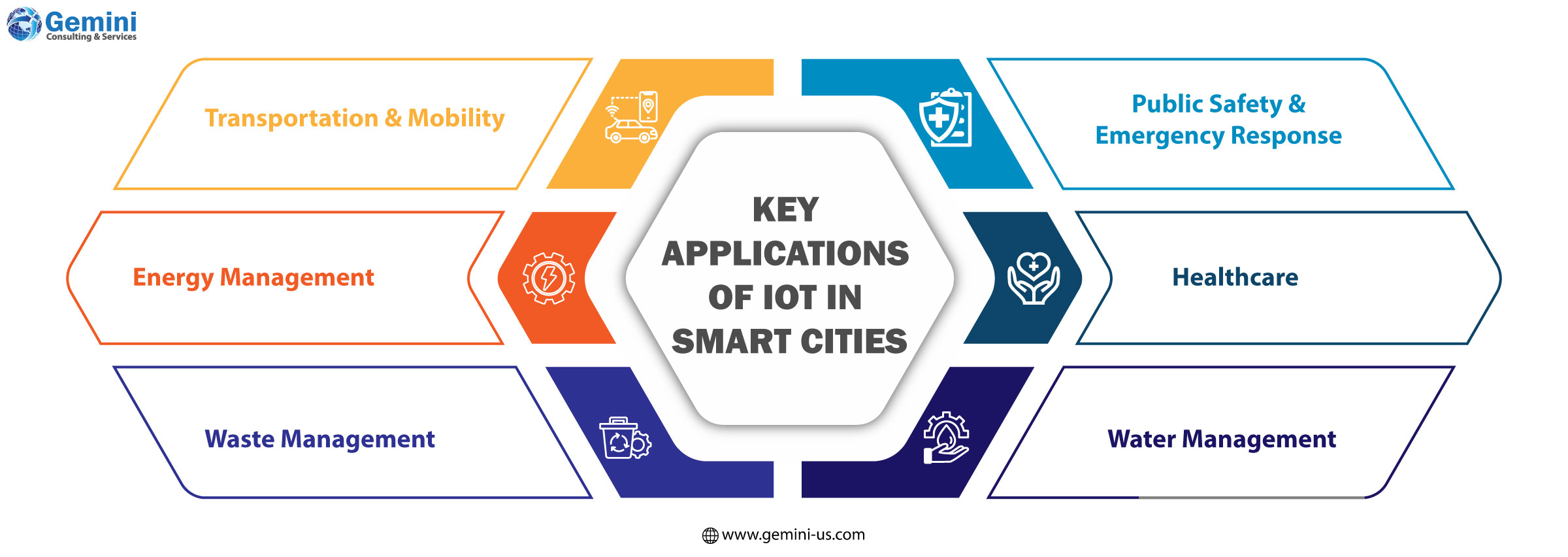
IoT is not just a buzzword. It is the technology driving the evolution of smart cities. The ability to connect devices, analyze data, and automate systems is transforming the urban landscape. Here are some major applications:
- Transportation & Mobility
IoT is critical in making transportation more efficient. From smart parking systems that help drivers find available spots to public transportation optimization that provides real-time updates for commuters, IoT enhances the flow of urban mobility. Predictive maintenance powered by IoT sensors can identify wear and tear in transportation infrastructure before problems arise, preventing costly repairs. - Energy Management
Smart grids that monitor electricity use in real-time help utility companies manage demand and reduce waste. Similarly, IoT-enabled streetlights automatically adjust their brightness depending on traffic and environmental conditions, saving energy while maintaining safety. Furthermore, the integration of renewable energy sources like solar and wind becomes more efficient when managed through IoT systems. - Waste Management
Smart waste bins equipped with IoT sensors can alert authorities when they are full, optimizing collection routes and reducing unnecessary trips. This not only cuts down on operational costs but also reduces traffic and fuel consumption, contributing to greener cities. IoT sensors are deployed to track the fill level of waste bins, enabling optimized collection routes. With 5G connectivity, this information can be accessed in real time, helping to lower fuel usage and operating expenses while enhancing the overall efficiency of waste management services. - Public Safety & Emergency Response
IoT devices enhance disaster management and emergency response. For example, IoT-enabled surveillance systems track real-time events, and sensors can detect environmental changes such as floods or earthquakes, triggering automated alerts to first responders. During emergencies, IoT can also help streamline response efforts by guiding first responders with live data. - Healthcare
IoT is also transforming healthcare within smart cities. Remote telemedicine services, wearable health devices, and connected hospital systems all contribute to improved healthcare delivery. IoT allows doctors to monitor patients in real-time, improving treatment for chronic conditions and ensuring that medical resources are used efficiently. - Water Management
IoT is helping cities manage one of the most precious resources—water. Sensors installed in water systems can detect leaks, ensuring that precious water resources aren’t wasted. Additionally, smart irrigation systems optimize water usage for landscaping and agriculture by adjusting schedules based on weather conditions and soil moisture levels.
How 5G Facilitates Smart City Development
While IoT provides the foundation for smart cities, 5G networks are the enablers, allowing for the large-scale deployment of IoT devices. The high-speed, low-latency connections provided by 5G networks make it possible for a vast number of devices to interact seamlessly, even across large urban areas.
For example, autonomous vehicles and public transport systems benefit from 5G’s real-time communication capabilities, which allow for quicker decision-making and improved traffic management. Similarly, smart buildings leverage 5G and IoT to monitor and optimize energy use, air quality, and overall building health.
Moreover, 5G technology enhances the security of these connected systems. Emergency responders can receive real-time updates on incidents, and the speed of 5G allows for rapid information exchange in critical situations.
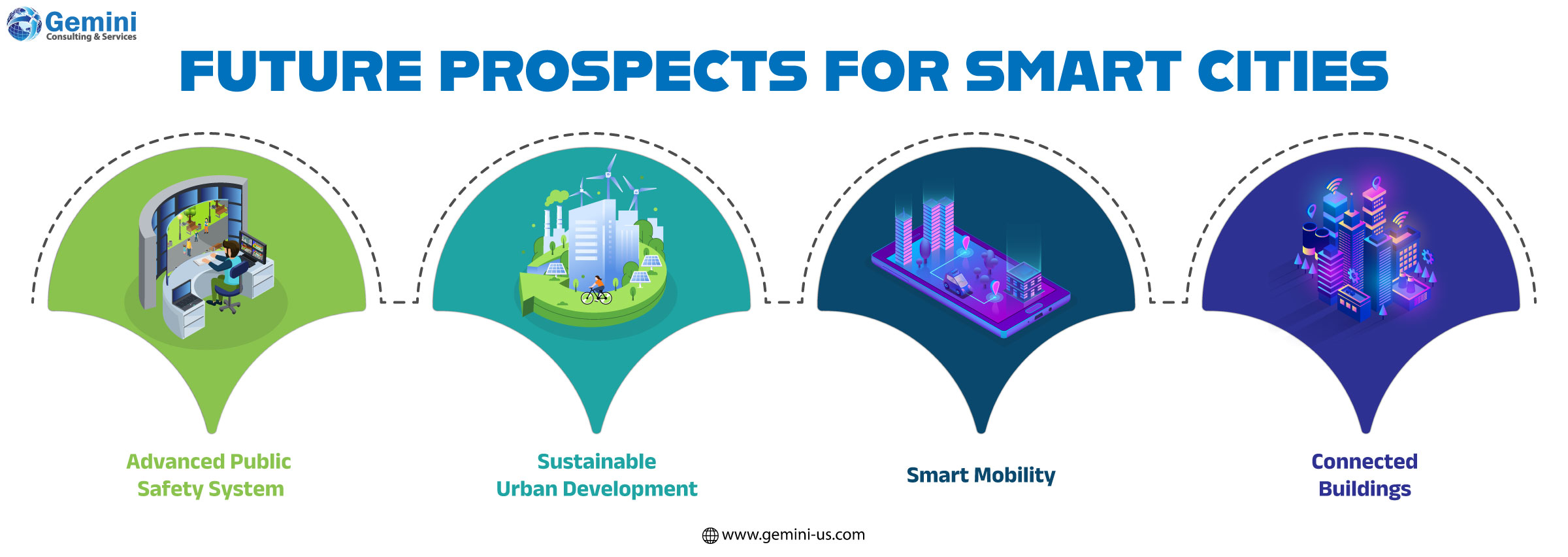
Looking ahead, cities will continue to integrate IoT and 5G technologies to further develop sustainable urban environments. Some of the anticipated advancements include:
- Advanced Public Safety Systems: Real-time monitoring of public spaces will help prevent crimes and provide better security.
- Sustainable Urban Development: IoT-enabled smart grids and buildings will be central to cities achieving their sustainability goals.
- Smart Mobility: Autonomous vehicles and integrated transport systems will make travel more efficient, reducing pollution and congestion.
- Connected Buildings: 5G technology supports intelligent buildings by enabling advanced systems for climate regulation, security, and maintenance. For instance, occupancy data can be used to automatically adjust heating and cooling systems, significantly reducing energy consumption while improving occupant comfort.
5G IoT will make these advancements possible by offering the high-speed connectivity needed to support millions of devices. With smart infrastructure becoming an integral part of city planning, the next few years will witness a revolution in how cities function and interact with their citizens.
With more than ten years of expertise in delivering innovative digital solutions, Gemini Consulting & Services has successfully implemented numerous smart city initiatives across India. Contact us to build a strategic collaboration focused on creating future-ready cities that promote sustainable lifestyles.
The Future of Connected Cities
The intersection of 5G and IoT is paving the way for smarter, more connected cities. As 5G technology rolls out, the opportunities for urban environments to optimize operations and improve citizens' quality of life will expand exponentially.
From energy efficiency to real-time traffic management and enhanced public safety, the potential of smart cities is vast. However, success will depend on cities' ability to integrate these technologies effectively, ensuring that they create spaces that are not only more efficient but also sustainable and livable.
As we move into this new era, the future of urban living looks increasingly bright, enabled by the combination of 5G and IoT technology, which will redefine how cities function and serve their populations.
Ongoing studies increasingly focus on combining 5G with emerging technologies such as artificial intelligence, blockchain, and big data analytics. These efforts are largely driven by technical researchers aiming to enhance efficiency, optimize performance, and improve service delivery in smart city systems.